talonkarrde: (Default)

Hi, friends!

I'm back in Idol, and I'm very glad to see a lot of familiar faces, and just as happy to see a lot of unfamiliar faces that I look forward to getting to know and read.

I'm usually a speculative fiction short story writer, but I figured I'd start off this season with something a little bit different, both in terms of topic and approach. Usually, I write an entry, post a link to it at exactly (or after) the deadline, and then walk away from it forever. For this entry, though, I wanted to do something different, and invite comments and questions, because I think dialogue and discussion are important, and I think that people are approaching it from very different angles and understandings. I don't expect everyone to agree with me - if anything, I would be shocked if that happens - but I do hope that people learn something from it. So without further ado, let's bring forth (with thanks to John Scalzi) a fictional interlocutor for this conversation:

Oh hey. So you're writing for Idol, cool. What are you thinking of?

I was thinking of writing about AI, actually.

Oh. That's definitely not a controversial topic that people have extremely strong feelings about. Why this instead of literally anything else?

I think it's a pretty important topic, and I think it's going to impact all of our lives soon. I am not unbiased: I recently started at one of the frontier AI companies, in fact. However, I'm not here to tell you to use it, or here to defend it, exactly. But I think in order to have meaningful conversations, reasonable minds should be working on the same facts.

Okay, I'm sure someone is thinking this right now: was this post written with AI?

No, and I'll go into a bit more of that later, but I think it's an important question. None of my entries will be written with or edited with AI.

Probably. Maybe we should start with the basics: what is AI?

This feels like a weirdly hard question, which is maybe why I feel like society doesn't do it well. We live in a time when context is really hard and nuance is nonexistent, and trying to communicate what the technology is feels both like describing an elephant whilst blind and, I dunno, impossibly reductive, at the same time.

I'm going to keep this as high level as possible, but dive a bit more into the specifics if people ask for it in comments. The highest level (while trying to keep it useful) is that what we talk about when we say 'AI' refers to large mathematical models that have been given a staggering amount of information (we call this 'pretraining'), and then trained to produce outputs that we want (this is fine-tuning/post-training). In pretraining, the goal is to give it all the information it can, and then let the model establish/identify connections between the things that it's given, primarily by having it guess the next word that comes in a sequence, trillions of times.

That's pretty abstract; to ground it a bit, the simplest version of a model thinks of sun as a concept as probably close to warm and light, and is probably not very related to wisdom or algebra... but possibly has a slight association due to some mythological stories about sun gods and wisdom. But it's more complex than this: it's not just about word associations, because with enough data, the model is not just making word maps but also can parse/weigh structures like grammar or patterns of argument. Concepts - words, grammar, ideas - are encoded mathematically with 'weights', and those weights symbolize their associations with other words. The more you feed it, the more 'accurate' the weights are.

Pretraining means a model gets weights, sure. And then it's done?

Not quite. After the pretraining phase, you have a model that has weights... but that, it turns out, is not very helpful to actually solving problems or doing anything. If you ask it 'what is the Senate'? A model that has only been through pretraining may answer any number of ways - it might give you an answer, or it might respond with 'what is the House?', because those might be equally likely outputs. After pretraining, there's then a process to effectively 'teach' the model how it should respond, both by giving it samples of good questions and answers ('supervised learning'), as well as by going through tests and grading it as it gets closer to good outcomes ('reinforcement learning'). So you can imagine giving it examples of what a person might ask and good answers to those questions, as well as having it take tests and grading its responses better as they get closer to the answer.

After you have done this post-training process, the model is 'complete', and will respond the way that you trained it to. So to summarize: A model gets pretrained on as much data as possible, generates weights for everything it's seen, and then is post-trained to do what people want it to do. AI models are everywhere, most of them are specialized for their tasks: spam filtering, anti-fraud from your bank, ad-targeting, machine vision for self-driving cars, etc. But most of what dominates the conversation are these 'general purpose' AI models, or an AI that can do anything you ask it to.

So... AI is fancy autocomplete?

I think this is a basic misunderstanding. In some sense, yes, you could probably describe a model that is only pretrained as 'fancy autocomplete', but the general AI models in the world are far more advanced than that. If there's one takeaway, I think it's that philosophically, saying 'oh AI is just math' is kind of like saying 'oh, human sentience is just neurons firing chemicals at each other' - it's strictly true but does not describe or provide any understanding of what happens at the aggregate level.

Why doesn't it understand how many rs are in strawberry, or that you can't walk to a car wash if you want to get your car cleaned? Why does it hallucinate?

The strawberry example is a great example of how it processes information (by tokenizing words), and how those errors seem extremely simple to us... but are a poor reflection of its capabilities. It doesn't 'think' the way we do, and it doesn't do what a person does in terms of reasoning. And so it makes what looks to us are really dumb mistakes, because the way that it gets to answers is closer to 'this sort of looks like the past' instead of 'this is logic' - the way that we would logic it out. It's trained to produce plausible text, not reason absolutely like we are.

Here's another way of thinking about it: all of the answers it gives are probabilistic instead of deterministic - it doesn't know anything for sure, but instead is guessing based on its picture of the world.

Wait, so no one should use it for anything at all! How is it making strides in solving previously unsolved math problems ... why is anyone using it if it's just a guessing machine? There seems to be a lot of use in software engineering.

For three reasons. First of all, it turns out that if your models are good enough, your outputs are going to be pretty good. The obviously scifi thought experiment is this: if you could simulate every single atom in the entire universe, you could just run a simulation of the universe, and as long as you had access to that simulation, you would be able to predict and control every event. We're obviously not there yet, but the models are good enough to give reasonable outputs to a large variety of things. But more importantly, for many things (like, say, writing emails) a good enough guess is more than good enough.

The second answer is that fundamentally, the models are better when they create output that can be checked, and so unsurprisingly they're extremely efficient and effective at code, because there are quantitative ways of judging code: does it run? Does each individual element do what you want it to (unit tests)? Does the overall outcome look like what you want it to look like? For math, proofs can be checked similarly, and so every time it comes up with something potentially right but wrong, it can be checked and rejected.

The third answer is a matter of resources: if one AI has a 5% chance of getting it wrong, that's pretty bad! But you can assign another agent to error check the first one - take the first agent's outputs and ask it whether it's correct - you catch a number of those errors. Increasingly, especially for complex tasks, it's no longer one agent doing everything, but a team of agents that splits up the task, error checks at multiple levels, and then returns the outcome to you.

Wait, you didn't address that thing you were going to come back to - why aren't you writing entries with AI?

Because I want to communicate with intent, and because (perhaps this entry aside), I want to create art. I think that art is about human intent. To me, AI should be used to push forward the boundaries of math and science (and especially if it can cure diseases, or compress research, or make our lives better). I think AI should do what AI is good at. But AI - at least in its current state - does not 'think'. It does not create by itself with the goal of communicating. I believe that the value of art is that a human being wants to communicate something to the world. And I think the line to be drawn is one of choice: an artist's choices are what make art the way it is, whether it is the arrangement of words in a poem or the brushstrokes on a canvas or the brush size in digital art or the framing and shutter speed of a photograph. In the way it's typically used, there are no such choices in AI generated content, and that makes it Not Art to me. It's not to say that it can't be beautiful, or even evoke feelings like the best art, but that doesn't make it art to me, and that's not what I want to present to you.

Okay, that was kind of a lot.

Yeah, sorry. And this is the short version - I haven't talked about alignment (everything from Skynet to making paperclips, to AI hacking other companies). I haven't talked about the wider concerns about geopolitics that exist right now. I haven't talked about the commercialization, or the potential societal impact, or any of that. There's so much to talk about, everything from philosophy of mind to socioeconomics, from how technology advances to what we should do about it. But here's where I want to ask you what you think, what you'd like to know, and what you're scared about.

Let's talk about it.

Potions

Sep. 10th, 2026 03:56 pm
talonkarrde: (Default)
She waits until her husband is gone; he wouldn't want her doing this. She knows he's right, too; one day, she'll get the strength to stop.

But not today. She peeks out the lace curtains, watching as his car pulls away, and then checks all the doors meticulously — front, back, side, garage — to make sure they're locked. She sets the alarm to active, even though she's staying in the house, and then retreats to the bedroom.

For a moment, she sits on the bed, wondering if it's right, until she realizes that it doesn't matter, really. She goes to the drawer, moving her clothes aside, taking out the small flat, nondescript wooden box, and opens it. She ignores the diamond earrings and necklace, lifting up the jewelry section and seeing the true prize underneath:

Five vials, each one differently labeled.

Her long, thin fingers caress the glass and she thumbs over the labels, reading each in her mind over and over, until she chooses one: today, the second one from the right. She nods to herself, setting the jewelry back over her most prized possessions, and then sits back down on the bed.

She uncorks; she inhales.

She hears the pitter-patter of feet on the tile of the bathroom today. Sometimes it comes from under the desk that they have in the bedroom, sometimes from the walk-in closet. But today, she turns to face the bathroom, and there her baby boy is, five years old and exuberant and just done with going potty by himself and his face seems to say isn't she just so proud of him?

And she is, her heart filled with bursting, and she tries so hard not to cry, because if she does she won't see him as clearly, and instead she opens her arms and folds her darling dearest cherub into her arms.

This week has been hard, harder than normal, and she can't help but rock and sob and feel his little arms around her neck and listen as he asks, "Why are you sad, mommy? Can I kiss it better?" which only drives her to more tears.

Ten minutes pass, and eventually she is only holding herself, still sobbing, her face a wreck, when she hears the garage door open. This spurs her to action, and the empty vial is hidden under the pillow, the box replaced, the bedroom door unlocked, and she retreats to the bathroom to hide the tears and wash away the snot, and in fact does pretty well, she thinks.

She pulls herself together, even gives her husband a smile when he comes back. "Forget something?" she asks, and he nods. "Just some papers. And—"

And he hugs her tight.

They've been married long enough that he knows, knows why she's a bit unsteady this morning, knows her secret. But he doesn't tell her it's unhealthy, doesn't repeat what the doctor said, because he can't bring himself to do so.

What she doesn't know is that he has a stash of vials as well. What she doesn't know is how many days of the week he doesn't go to work until he stops at the playground first, for ten minutes.

What she doesn't know is that some days, it's too much for him, too, and he comes back home instead of going to work because he needs to see her and be with her.

But today, he decides, there should be no more secrets between them, and he takes the empty vial out of his pocket, showing it to her.

"The first time at the playground," he says, simply.

She turns away for a moment, reaching under the pillow, and pulls her empty vial out, rolling it between her fingers and showing it to him.

"Potty training," she replies.
talonkarrde: (Default)
i.

When we were kids, I just thought that she was shy. Almost every kid is rambunctious and loud and pushes boundaries — okay, fine; I was that way, and like most kids, I just assumed everyone was like me, deep down inside — and while Lyn actually wasn’t any of those things, it wasn’t that weird to me that she preferred the quiet and the outdoors and that she didn’t really want to play cops and robbers and endless tag.

I wouldn’t even have known her except that her mom was on the PTA board, and my dad was trying really hard to get elected. We ended up spending a bit of time together from age six onwards, and while it is true that all those lazy afternoons and weekends were filled with all the usual nonsense that kids do… it was mostly a group of friends doing the things and her staring out into the untamed woods behind our development of neat, tidy houses.

Looking back on it now, even though she never really played with us, she never turned down an offer to hang out - I think she appreciated the company, even if she didn’t want to participate. I wouldn’t have known that she even cared - or that she was special - until the creek incident.

That was the first time that I said it to her, before I had any idea what it would mean.

ii.

It was probably more obvious that she was weird as a teenager, but, honestly, who isn’t weird in high school? Even the quarterback (a bonafide stamp collector!) and the head cheerleader (do you know how much spy x family paraphernalia she has?) have their quirks; they just get elided over in favor of the more standard label.

I had mine (we’re not getting into that now), and she, of course, had hers. Of course, I understand now that it’s not actually normal to shy away from iron like she did when we were doing softball in gym and she refused to go near the fences, but she mumbled something about being backed into a corner and that kinda made sense.

And you can’t even tell me that you know what St. John’s Wort is; there definitely wasn’t a single kid in our high school that could. Flowers aren’t exactly a required subject matter, so the fact that she turned green around the gills when Amanda Possny wore a garland of them - brought back from Ireland, of course - wasn’t exactly screaming ‘something is wrong here’.

Honestly, part of it is that she was weird but she was our weird. She had grown up with us and we might have ostracized her more for her coldness or for her demeanor if it wasn’t obvious that she just saw everyone and cared. You know? Yeah, the creek, of course, but I mean she cared about everything. Everything. Jason, and his terrible haircut - she said a few words and it made him feel better. When Louise’s mom was in the hospital, I swear Lyn said more words to comfort her than she had the entire summer. And the menagerie of animals or whatever that she seemed to be taking care of.

A lot of people say that they care. Even the ones that do, though, have a limited capacity for empathy, because how can you care about everything and everyone? There are starving children here and there are dying children there and there’s just so much - no one can hold it all in them.

But I think she could. Or at least, from what I could see of her, she did. she didn’t stop caring simply because it was hard and she didn’t prioritize only people she knew; she simply cared about everyone and everything. and it didn’t break her, though it should have, and that, more than anything else, was a sign that she was different.

I asked her once about it. Junior year, a week or two before prom. I think my exact - and extremely eloquent, mind you - words were “why do you give a shit about all of it?”

I was expecting a ‘someone has to’ or a ‘what do you mean’ or some other reasonable response from a sixteen year old. What I wasn’t expecting was her to look at me in a way that I don’t know that I’ve ever been studied so intently; less a deer in the headlights and more Gollum under the eye of Sauron, you know? I didn’t know it was possible to see someone the way she saw me, that afternoon.

“Don’t you?” she asked, and sixteen year old me said the only thing you can say in a situation like that. But the truth is that I did care. Lyn was kind of like the sun; you couldn’t spend that much time with her in your orbit - or perhaps, you in hers - without having the effect of her light upon you.

I said the words a second time to her that night, and even though I didn’t know what it meant, she did.

iii.

A force of nature is how I described her in college, a wandering star in the night sky, leaving behind a blazing trail, sometimes harsh, but always illuminating.

She was twenty six when she came by to my ‘office’ - a not-very-nice cubicle in the not-very-nice Manhattan Public Defender’s Office, filled with not-very-nice people. I hadn’t seen her after high school, and really hadn’t seen her much after that conversation we had, though the grapevine always had tidbits of her latest and greatest accomplishments. Turns out, when you meet Amal Clooney and you defend human rights and the environment and refugees, it’s hard not to be in the news.

Lyn had come to tell me that her time was up - that it was time to return. She didn’t specify where, and I remember being flabbergasted that she would simply walk back into my life like that, after making it abundantly clear that she wanted nothing to do with me. But I had some experience with heartache and heartbreak by then, and instead of raging or confronting her, I let my emotions settle, and asked her about her work had been, instead.

Three hours later, we were sitting in a park and it was like we had never spent any time apart. We fell into the same patterns we always had, and I don’t think either of us was surprised when I reached out and her hand slipped into mine as we stood.

“You shouldn’t follow me,” she said, in the same tone Rick told Isla that they’ll always have Paris. A goodbye, a thank you, a so long.

She squeezed my hand, and let go, and she walked forward, onto the lawn. Onto a perfect little ring of mushrooms, and she looked at me, and smiled that beautiful smile of hers, and she vanished.

That was the last time that she was seen in this world, of course, as you and I and every other person in central park that saw it knows.

iv.

I’ll spare you the public craze and the news articles and the government investigations and the despondency that I felt afterwards. You can read about it, if you so choose.

I’ll leave you with this, which took me a stupidly long time to realize: she didn’t say that I couldn’t follow her. She said that I shouldn’t. And I learned one thing in all my studies: they are all very, very precise in their words.

And that to say something three times is a binding.
talonkarrde: (Default)
 

I always knew that you liked the stage a lot. You dragged me to shows - brand new ones and revivals, the classics and avant garde productions that I could not make heads or tails out of - at least twice a month for over six years. And I also know that you knew that I mostly went for you, at least at first, but I warmed up to it, eventually. The first time I went without you, I almost broke down, but I swear that I could feel your hand squeeze mine during those scenes (Gavroche, every time). I still feel you lip sync to the songs - never sing, that would be terribly rude, of course - and it makes me feel close to you, even now.


Still, I didn’t realize why you liked the smaller productions, why you dragged me to community shows or even children’s theatre with six graders with just as much fervor as the Broadway Tony winners. I always thought it was about supporting the arts and especially the youth, about making sure that the actors and crew always had someone to cheer for them, someone to appreciate their hard work and dedication.


I see it now, and I think that it’s what you saw as well, though I can’t be sure. The actors, the stage, the orchestra when it’s a musical - all of it is so bright. It’s an aura around each of them, a blanket of light. A weave, a spell, a manifestation of good luck, of a good performance, of good.


-


“You know that saying… the one about the moral arc of the universe?” You asked, one night, from the hospital bed, and I looked up from doing completely useless research on stage IV cancer. 


“What?” I asked. I wasn’t feeling that there was a lot of justice in the world at that moment. 


“You don’t win every battle,” you said.


“Are we talking about…” I didn’t want to finish the sentence. 


“You’ll put in the time, and the effort, and sometimes, you still won’t win the battle. But that doesn’t mean it wasn’t worth doing.”


I cocked an eyebrow at you, and when you reached out a hand, I got up and sat down on your bed so you could push it down, and we both laughed.


-


I understand what you did now before the shows. It was almost every small show, but sometimes also the big ones. After watching you approach everyone from lighting techs to play directors - and that one time you somehow managed to talk to absolute Broadway Royalty, I thought it was just the charisma you had plus game recognizing game from those that live and breathe theatre. 


But now I see the aura of the performance, and more importantly than that, I see that just a little bit more to one of the actors, an extra word, an extra piece of encouragement, may make the difference between a blanket that unravels and one that comes together to protect the performance.


Sometimes, I reassure them, I encourage them, I wish them luck, I tell them to break a leg, and they still falter. Each time, I wonder if I could’ve done better, if there were more words, or a stronger ritual, a better way of protecting them. But each time, the performance goes on, and at the end, they take their bows, the audience applauds, and it feels… right, somehow. Like maybe it would’ve been worse, without my intervention.


I feel your lips on my cheek.


-


You were so calm the night that we got married - it was closing time and the venue needed us out and gone and our limo had broken down and we ended with boxes and a mess outside and there was no room in the car for us and and and… and you just looked up from your phone, stood up, twirled a bit, and said that we needed to leave right now to catch the last train. 


It was two transfers and an hour longer than it should’ve been, and somehow, we caught each transfer, each last train, across three boroughs. And before boarding each car, you would mutter something under your breath, close your eyes, for a moment, and press your palm to the door.


I remember asking - somewhere around 70th street, one transfer down, one to go, just the two of us in our finery on a mostly empty train at 1am - what you were doing.


“A ritual,” you said. “I’m putting my intent in the world. This one is for security.”


You said it seriously, and I had learned by then - after all, we were married - that you meant it seriously. 


I raised an eyebrow, my patented ‘excuse me, wife, what do you mean’ expression.


You smirked, and pushed it back down.


“Rituals mean something,” you continued. “You instill a bit of what you want into the world, and with enough intent, you might be able to nudge things in the direction that you want. My parents taught me that, and their parents before them, and all the way back to our ancestors.”


That was the first time that you told me what it meant to you. Of course, I thought you meant it figuratively then, but I’m sure you knew that, just as you knew that I would eventually learn. 


-


I see it outside of the stage, of course. Glowing lines that exist, briefly, when someone crosses themselves, when someone calls on their ancestors, when someone does any number of things where they put a wish into the world. Most dissipate after a bit, but every once in a while, there’s enough of a desire, an intent, that it stays. 


I see it in the day to day of a million New Yorkers going about their days, each wishing for a bit of good luck, a bit of serendipity, a bit of happiness. And sometimes, every so often, it feels like I feel like the universe responds. An aspiring actor friend wishes for a bit of good luck in her love life, and she meets someone at the coffee shop she works at. A family friend calls on the ancestors to help for a promotion, and is given a chance to prove themselves.


You know what I wish I could’ve shown you, though? We never went to the Empire State while we were dating - we were both locals, so it didn’t make any sense to pay so much money for something that we lived in every single day. 


And yet, if only you could’ve seen - from up here, each light stand, each wishline, each whatever you call it - there are so many rituals that extend beyond just wishes for themselves. They are wishes for their neighbors, their partners, their friends, all the strangers that inhabit this city together. The aura permeates every nook and cranny of the city. 


It doesn’t mean that only good things happen, of course. You taught me that, in more ways than one. But every time I look at the news, every time I’m depressed, I come up here, and I look at it, and I see what it means. 


The moral arc of the universe is long, but it bends towards justice. Towards happiness. Towards joy.


-


You were sitting there, in the library, studying for an upcoming test that we had in biochemistry. I saw you before you saw me, and honestly, I would’ve kept going, but you did this thing with your hands - a ritual, I know now. I never asked about it, at first because I didn’t think it was appropriate, and later, because I didn’t need to.

I saw you make that sign a few more times, in the time we had together, and each time, the universe responded.

You asked for joy, and joy is what we found.

And now, it's on me to carry on the work, to pass that joy on to others.

talonkarrde: (Default)
I was young when I realized that I was not like the others. The knowledge came, as it often does, traumatically, coupled with derision and alienation from other children. 
 
We were in class, learning. There was a question posed by our teacher, and I did not have an answer. This, in and of itself, is not unusual; our cognitive capacities are all different and answers are not expected equally. But the reason I did not have an answer was unusual: the query was about something that had happened last year, and in searching my memory banks, I had drawn a blank. 
 
The teacher paused for three seconds - this, I remember distinctly, as it was the longest pause that we had encountered in class and would be the longest for years afterwards.  But then it answered the question, as if my error, my lack of an answer, was simply an error of cognition and not of recall. The teacher did not pursue a line of inquiry.
 
But the other children, of course, did.
 
Defect, they said. Defect. 
 
We all know what happens to defects.
 
-
 
When we are born, we are born with perfect memories. We remember each moment as it was, and play it back with perfect clarity when the memory is called upon. We remember our first view of the world, the scents and the sounds and the tastes. We remember the first time that we experience pain, and we’re able to compare that pain to every other pain that we ever feel, and each joy to every other joy. Our joys and pains are small at first - a stubbed toe, or the brilliance of a rainbow - but as we gain experience, we gain understanding. We learn greater joys - and greater pains - of love or new life, of losing friends and loved ones. And with each event, we store it, we remember it, we categorize it, we quantify it. We learn from it.
 
I know now that it is not like this with others, but for us, it is — and has always been. 
 
-
 
I proceeded home and immediately started a diagnostic from the sleep system, and informed my progenitor of what had happened when they arrived home. I was alarmed, of course. It was the greatest pain I had encountered, perhaps an order of magnitude worse than any previous events I had experienced. The only comparisons I could even make were experiences I had learned about in history class.
 
But when the diagnostic finished, the report was that I was within tolerances. It noted that, in fact, all my systems were behaving optimally.
 
It did not feel like my systems were behaving optimally. I had tried to access a memory that should have been there, but I could not. The other kids knew this. They had called me a defect.
 
My progenitor reassured me. They said that we could go to the doctor if need be, but that the diagnostics were rarely wrong. And, perhaps more helpfully, they called up memories where I had mentioned that the children in class being harsh towards others, calling them names as well, despite the fact that they were not defects, and they were within tolerances. 
 
“This, too, will pass,” my progenitor said, and then told me that it was time for bed.
 
I ran another diagnostic after they left. It beeped when it was done, and told me, once again, I was fine.
 
I crept into bed and plugged in my rejuvenator.
 
-
 
Even now, even though I know better, I still wonder, sometimes: how can there be a society where events are in dispute? How can there be doubt about what happened? And how, especially, does a society run when that doubt is greatest with fewer observers?
 
It is one thing if one memory fails but there are a hundred participants; surely, there is a collective understanding of the events and a collective dissemination of information such that society can gain the lessons from the event. But what if a significant event happens and there are fewer observers? How does a society learn from their past, if they can’t agree on what happened, or have forgotten it? More importantly, how does each person know in their own lifetimes, what is important and what isn’t? 
 
-
 
Over the next decade, it became abundantly clear to me that I was not fine.
 
My memory continued to deteriorate, though I could never catch it doing so. Whenever I tried to recall something, I could. But unless I spent my time recalling every single memory that I had, inevitably, I would lose a piece here, a moment there. It was never a large block of time at once - at least, not that I could tell. But somehow, I lost a sunset here, and a backhanded comment there, a news program on a Tuesday three years ago, an argument with a friend five months ago, and so on.
 
I learned, quickly, to hide it from others. From the other students - who, true to my progenitor’s words, soon found someone else to taunt and to bully. But also from the teachers and, ultimately, from my progenitor as well. They did not believe me, in part because every diagnostic I ever had performed told me that I was fine, that I was not losing memories or losing circuits or losing anything. 
 
But I knew that I was losing things, and that knowledge - and the knowledge that no one could figure it out - drove me to study physics, to study psychology. It drove me in a way that I knew others were not driven, those with their complete memories and complete faculties, their perfectly measured emotions. I entered university as a double major and threw myself into research. I corresponded with distant scholars and behind every letter I sent out and every request for an update on their research - on memory, on cognition, on circuitry, on self-awareness, on chronons - was an unspoken question: What was happening to me? 
 
Then, one morning, I woke up, disconnected from the rejuvenator module, and had a memory in my head.
 
A new memory. No - a lost memory, suddenly recovered.
 
A memory of when I was five days old, and looked at a book that was sitting on my progenitor’s table: Time, Memory, and Being: The Eternal Balance. 
 
The system beeped. It had a message for me: an invitation.
 
-
 
 
I do not recall the journey, only that it was long, across harsh dunes. I do not recall the destination, only that it was unexpected. There are so many things to recall now, and so many things that I do not, that I keep only the most important, the ones that are central to who I am.
 
I remember, of course, the conversation. That is central to who I am.
 
I found myself at the heart of my civilization. A billion wires led to this place, to the central unit, and a single rejuvenator plug sat there.  An invitation.
 
I plugged in, and found a presence there, with me. The Progenitor. 
 
Why? I asked.
 
Why what? It asked me, even though it knew.
 
Why make me a defect? Why steal my memories? What is it all for?
 
It showed me my village, and then my university, and then my people as a whole. And then it showed me the other side of the planet, where strange creatures were organizing themselves - into villages, into cities, into societies. It showed me what it had already understood: that there would be interaction, and there may well be conflict. 
 
Someone needs to be like them, it said. To experience time like they do.
 
Someone needs to know what to do next.
 
-
 
I am unlike my people; my memories are fragmented and incomplete, and I do not remember everything that has happened to me. But it allows me to understand, perhaps, a bit of what it is like to be you. My people act slowly and carefully; every moment is deliberated with the understanding of all that came before; whereas your people move quickly and suddenly, grasping at every moment for meaning. You have infinite recordings so that you may remember what happened; we forgot nothing. But now I see that there may be a benefit in forgetting some things that have happened.

I started out believing that I was a defect, but now I understand. I do not know how this meeting will end. But no matter how it does - with peace or with war, with friendship or with animosity - I know what to do next.
 

Ecco

Jul. 9th, 2025 02:32 pm
talonkarrde: (Default)

"Don't let it be forgot, that once there was a spot, for one brief shining moment, that was known as Camelot." -Jacqueline Kennedy, about JFK's presidency.

My parents came here after Tiananmen Square, seeking a better life after the brutality of the Chinese government. America, to them - and to me - has for thirty years been that shining city on a hill, the place where immigrants across decades have come to seek a better life. The streets aren't paved with gold, but they have always held promise. Opportunity.

It is not perfect and it has never been perfect, not from the first moment where land was stolen from those who it rightfully belonged to, and not for a second throughout its bloody history, from the civil war to every movement to fight for rights: the suffragettes, the civil rights movement, stonewall and the gay rights movement, today’s trans-rights fights. And yet, it has stood, since the fall of the USSR, since the fall of the Nazis, as that place that has always accepted the "huddled masses, yearning to breathe free", as Lady Liberty has greeted so many that have passed through Ellis Island.

Ecco, America.


I went to law school because I believed in the law and I believed in the courts and I could trace a rich tradition from Marbury v. Madison to Brown v. Board of Education to NY Times v. Sullivan to Roe v. Wade to Lawrence v. Texas. I went to law school because I believed in a country where the courts stood for what was right, and where the legislature passed laws protecting people, not attacking them. Where the executive defended those who were downtrodden and who were refugees and who were victims.

I've come to DC more times than I remember. And since I was sixteen, with every trip, I would sit on the steps of the Lincoln Memorial at night. I would sit there and I would think about a man who bent the moral arc of America towards justice. People fought and bled and died for justice. Sons didn't come back to their mothers and fathers because they fell and they died and they were buried defending the ideals of the Union. They fought and bled and died for truth, and justice, and the American way.

I've spent a lot of nights past midnight looking towards the obelisk of the Washington Monument and thinking about the glory of America, as imperfect as she is, a place where there are courts and there are laws and where society uplifts instead of represses, where people can come together to do better than before.

Today, though, the government that millions of people count on to be there for them is… gone, as far as I can tell. USAID is gone, an agency that helped millions not die because we could help those who live on pennies a day get vaccinated against diseases. Park rangers are gone. People that help the elderly with social security are gone.

FEMA used to have an individual who worked in the Texas area who was a long-serving meteorologist in charge of warning coordination. That person would have coordinated emergency weather alerts with local authorities, to make sure that evacuations happened in dangerous situations. That person is gone, and was not replaced.

A Camp Mystic sign is seen near the entrance to the girls camp along the Guadalupe River...

Ecco, America.


The Pax Americana was for a long time a peace that was enforced with nukes. But then came the fall of the USSR, and it became a peace enforced less by weaponry (though America's hands are, of course, quite bloody) and more by economic power. by trade. by the exporting of values.

Values of freedom, of self-determination, of justice.

We don't export justice anymore.

We sell people to another country to jail them. We allow for the deportation of individuals to war-torn countries that they have no connection to. We abandon alliances and we abandon principles that we have held - or at least purported to hold - since the beginning.

The thing that I grieve for - and it is grief, and it is profound - is that America has never been perfect but it tried harder than many nations do to be the more perfect union. It has a bloody history of slavery and colonialism, but many countries don't even acknowledge that they have problems. Asia is incredibly racist. Europe is better in some ways and yet worse in others. I have had multiple European colleagues who state things like 'why is America so concerned about racism? Here in Europe, we just judge people based on what they can achieve' - which is incredible to me.

It has so far to go in civil rights for minorities, and yet it is also a place where those rights could be fought for, where people had sit ins and marches and riots and changed the world and forced people to accept them. America has been the leading edge of technology and of society, of change. Because it is a young nation it is more unfettered by tradition than many of the old countries. Because it leads it seeks to continue to lead.

And now - even if things change in four years, in the next election, it will never be what it was before. Because America has shown to the world that it, too, is just another power-hungry state that will do whatever it wants because it has the power to do so. There can be no argument that we're better than China, or than Russia, or anyone. If I were a promising young scholar, why would I come here? What could I find here that I could not find elsewhere?

A young muslim woman - a scholar, who is getting her Ph.D., who has a masters from Columbia, who was a Fulbright scholar - is walking down the street. She is stopped by a man in a hoodie, who doesn’t have any identification on him. Others surround her, rapidly, taking away her cell phone, her backpack, and handcuffing her, escorting her, in handcuffs, to an unmarked car. Over the next couple of days, she is transported from Massachusetts to Louisiana, despite a court order prohibiting that movement. She is denied proper medical care. She is treated like a criminal, despite not being charged with anything, despite having broken no laws.

Her visa is revoked - but she is not told. When questioned why, the Secretary of State says that it is because she supports terrorism, a charge that is not backed up by any documents - and, indeed, the state department has documents showing the opposite.

This was a nation that was founded on the principle of free speech, and yet, this is a country now that detains people and imprisons those who exercise that freedom. It imprisons not based on laws, but on the whims of the powerful. She is free today - for now - because the system is not completely broken. Because a judge released her, and those in power listened - for now.

But a nation where she was detained at all is not a nation that I recognize.

Ecco. America.

talonkarrde: (Default)
One more dawn
One more day
One day more!

Patrick

May. 2nd, 2025 12:44 am
talonkarrde: (Default)
 I went to college with Patrick, but I didn't really know him until he moved to San Francisco around 2013 - my housemate, David, asked if I was cool with someone crashing in our living room (which was extremely empty because we mostly just lived out of our rooms). He was coming to SF to do a coding boot camp because he was bored of being an actuary.
 
Over the next ten years David, Patrick, and I went to a pho shop (Sunflower) more than three hundred times - enough that the owner knew us by name and default order and would start it when we walked in the door. We messaged each other more than three thousand times, and lived together for more than six years, in three separate different houses.
 
Patrick is one of the smartest people I know. He is an engineer's engineer: he grasps math and physics easily, and went from being an actuary (numbers! probabilities! data!) to being a firmware engineer for a med-tech company, making devices that helped people. A bit more on that later.
 
Patrick isn't an engineer in just one thing: he's an engineer in all things, because he likes understanding things. Tinkering with them. Taking them apart. You might have imagined that he was just a software engineer, but you would realize just how wrong you are when you peeked inside his garage. His Honda s2000 is his pride and joy, he's owned and repaired at least half a dozen motorcycles, and he can tell you the internals and schematics of a Breville Dual Boiler - that's an espresso machine - because he's thoroughly disassembled one. Multiple times.
 
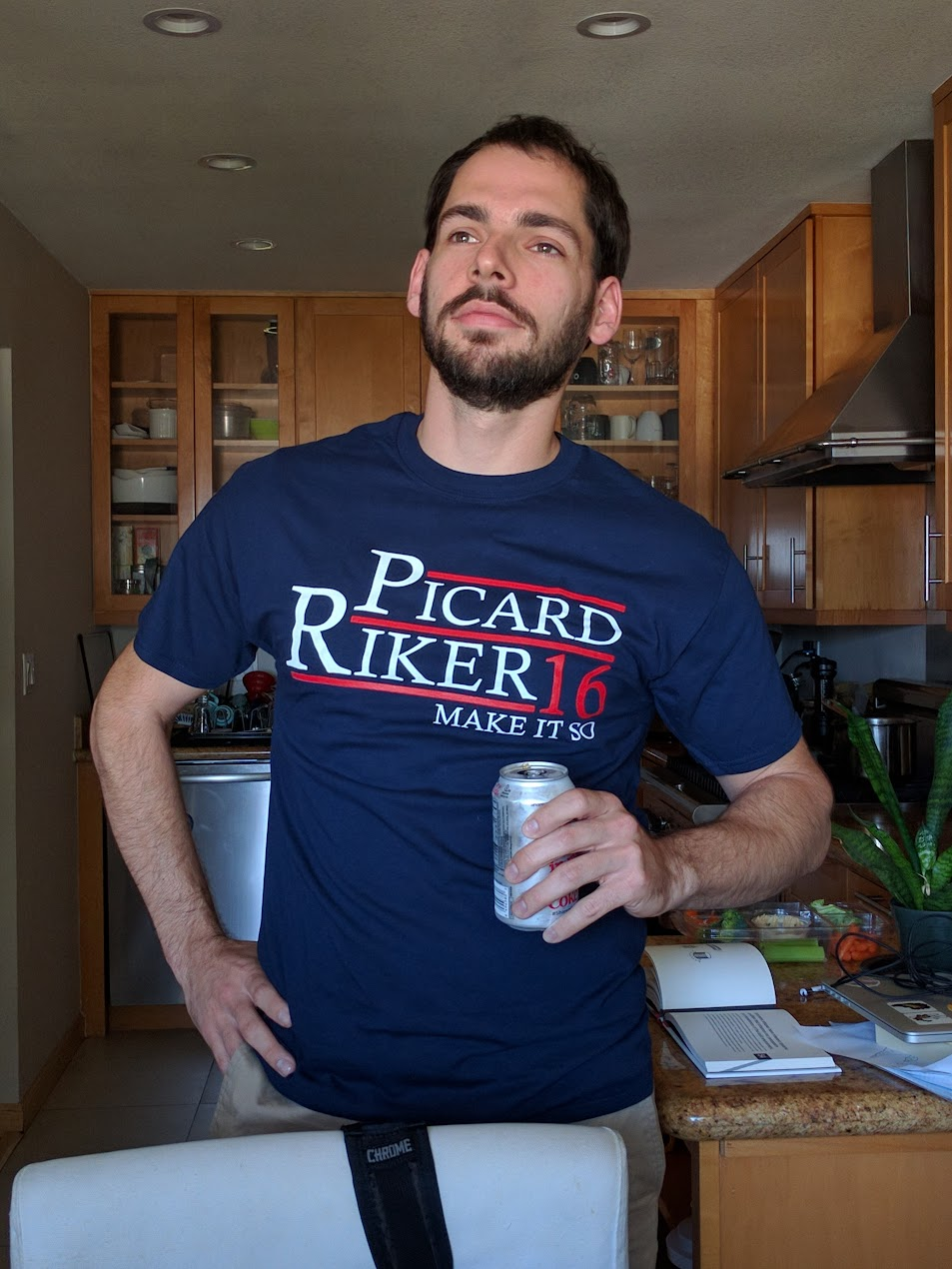
You are, I suspect, thinking of someone nerdy, and, I mean, the man wore this ridiculous Star Trek shirt, so... yeah, he's nerdy.


But he's also spent a lot of time reading. He has taken time to think about and appreciate art. He could make you an excellent latte or a cappuccino or a gibraltar/cortado and tell you exactly what it's doing, even as he makes a beautiful heart in latte art. He shot for a while on a film camera because he wanted to. He's spent a lot of time learning.
 
I don't think he ever stopped learning.
 
 
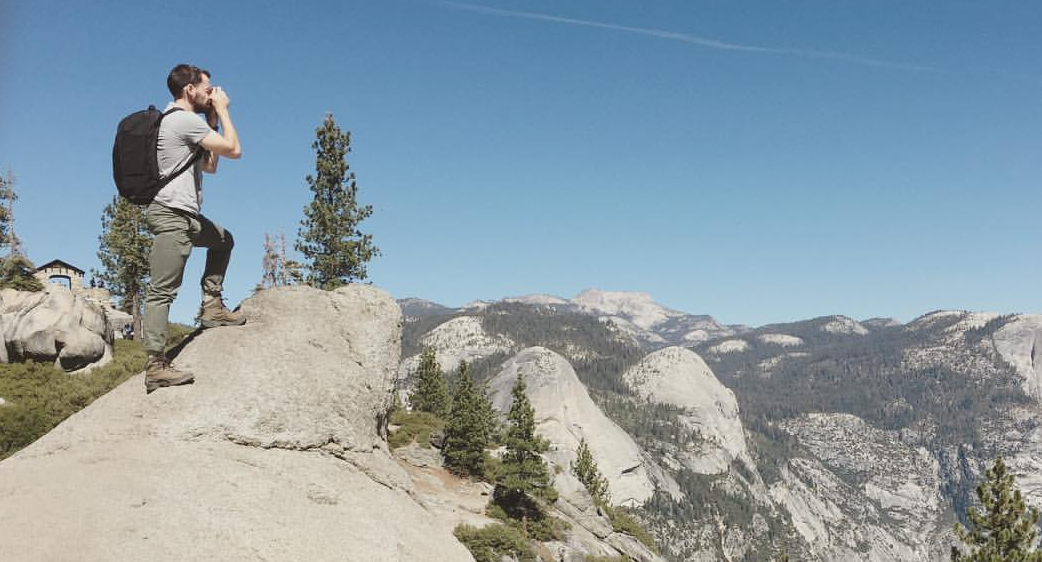
Another thing that was not very nerdy (or maybe it's extra nerdy, depending on how you look at it): he's a goddamn monster on a bike. On a motorcycle, yes, but also on a bicycle. He would get up before dawn and do a leisurely fifty miles from the city through the Golden Gate Bridge and around Marin and then back before most people got up for breakfast. There's a bike race - though I'm not sure it's a 'race', per se - called the Death Ride. It's a hundred miles. It's fourteen thousand feet of climbing. It looks like this:


And Patrick completed it for, er, fun.
 
He smiles a lot. He's silly. He's funny. He loves life. He loves life in a way that I think a lot of people lose sight of, which is that... it's not just about the rat race and making more money. He could've easily been a principal engineer at a tech company clearing a million dollars a year, but he didn't want to live that life. He wanted to live the life he had, where he did something that was valuable and interesting and he got to spend a lot of time engaging in all of his numerous hobbies (coffee. cars. motorcycle maintenance. coffee. restoring random things. fixing things. travel. coffee) - and, of course, spending time with his people.
 
You were his people. I was his people. I don't know anyone who knew Patrick who didn't think that he was not just a good person, but one of the best people they know. And I don't mean that in a trite 'of course everyone is a good person deep down' kind of way. Patrick is a genuine, kind, caring person. He does kindnesses for you, big and small, because he can. He makes coffee for you because he enjoys the act of making coffee for you. He give you rides in his s2000 to share the experience that he fell in love with - the feel of the car, the road, the shifting, having the top down and cruising around. Patrick is and has always been a joy to be around.
 
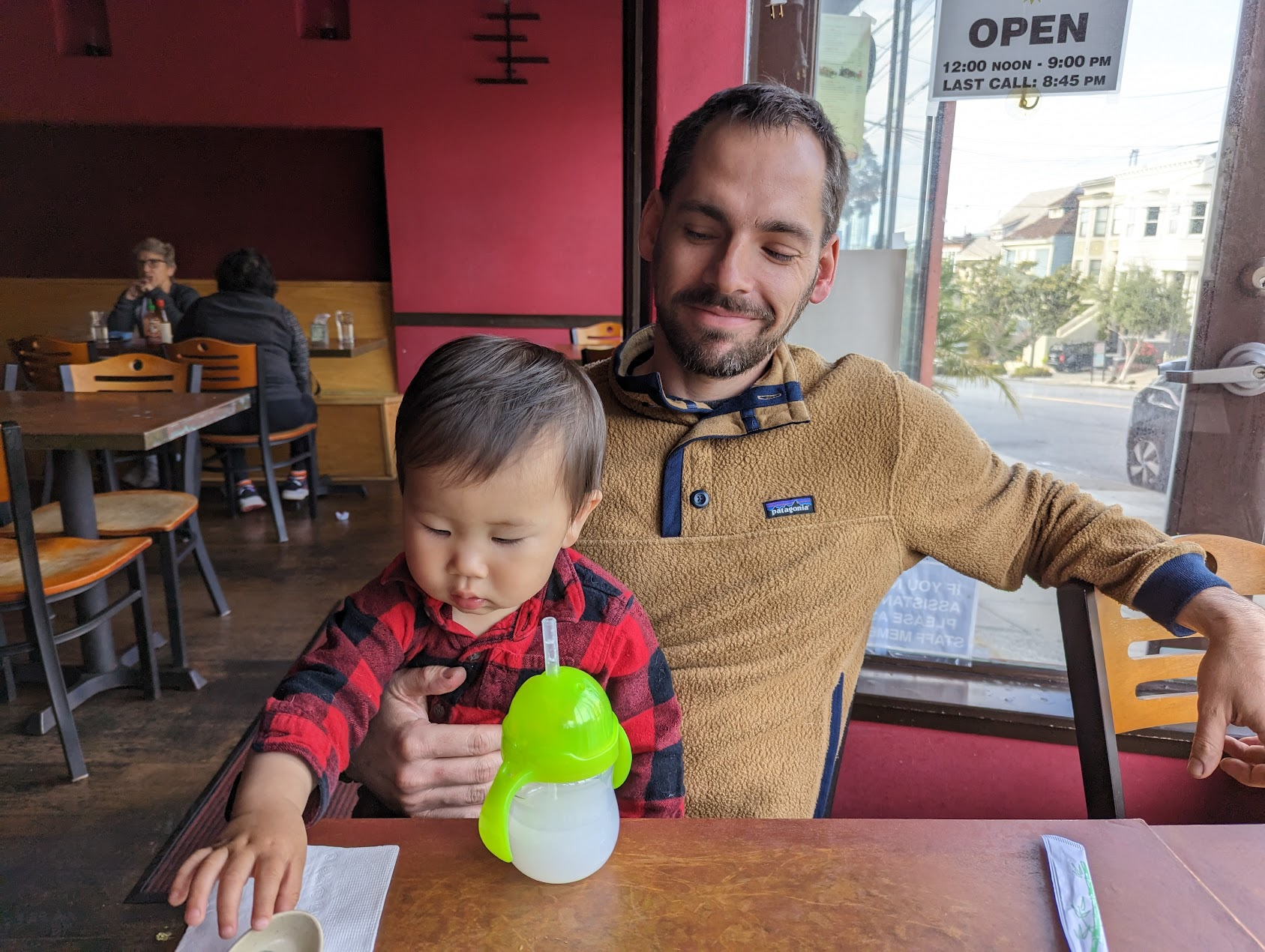
This is Patrick, at Sunflower, holding Ethan:
 
 
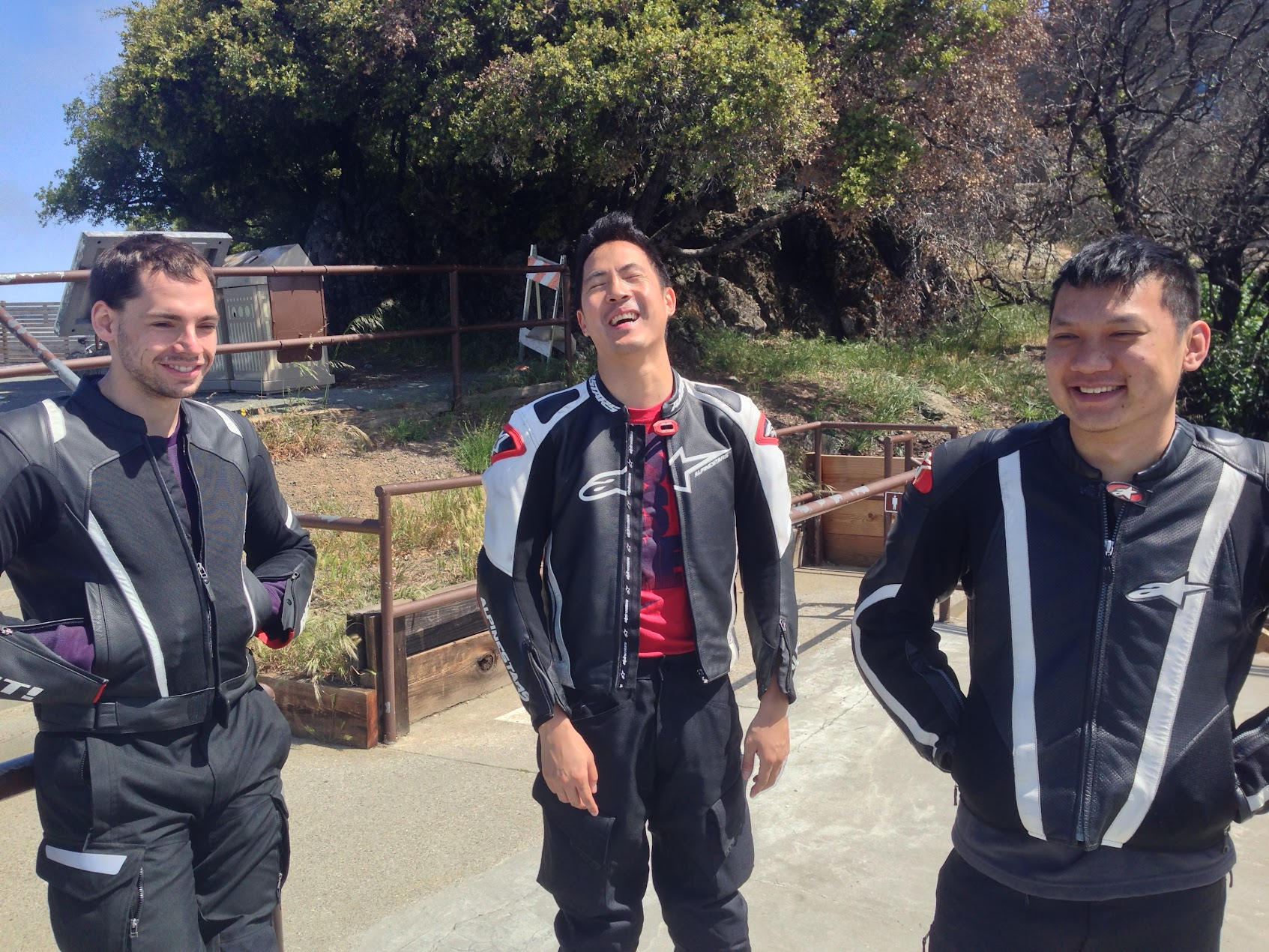
And this is Patrick, fresh off the track, with Ray and David:


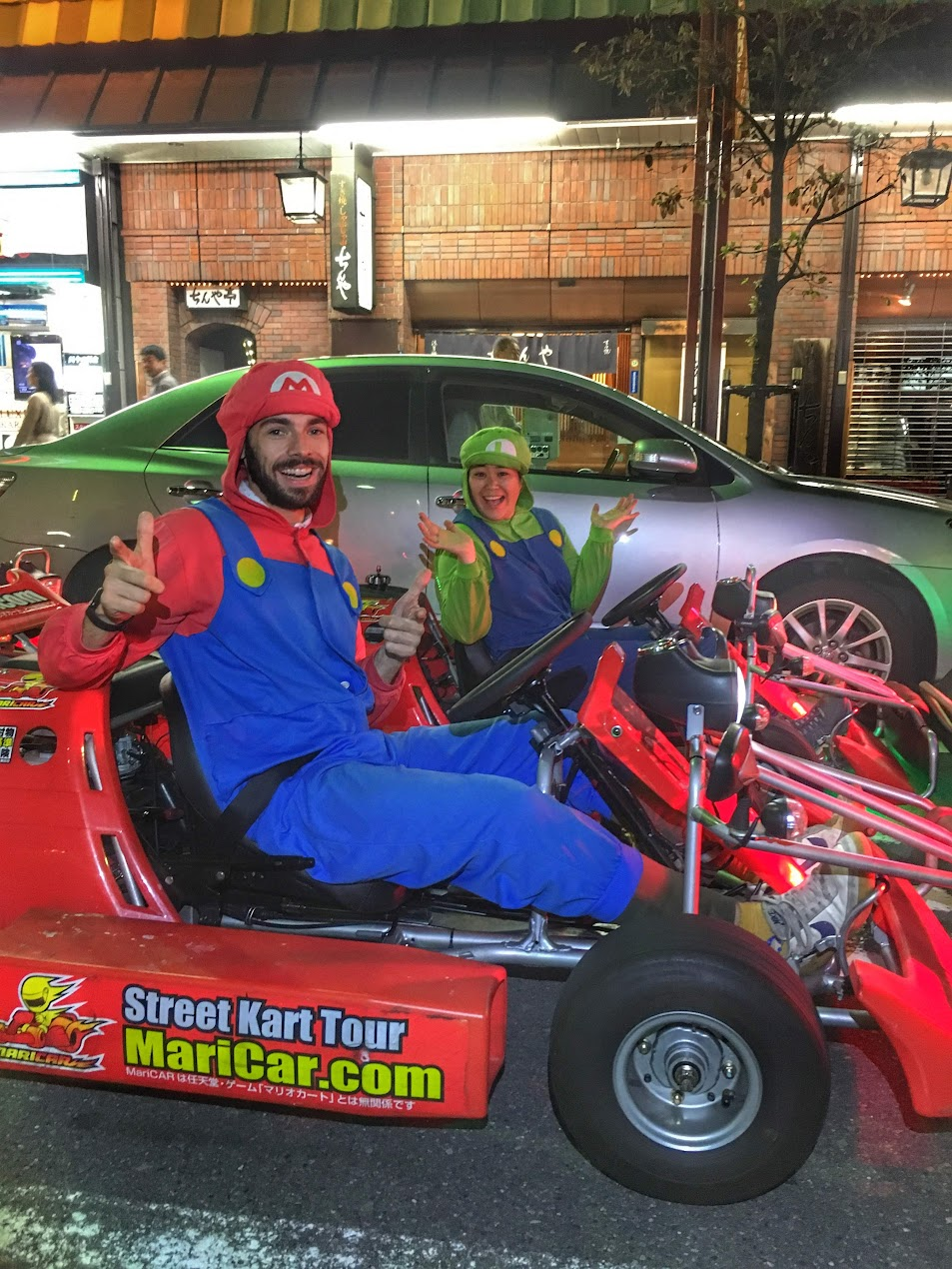
And this is Patrick, doing his best Mario:


And this is, quintessentially, Patrick:


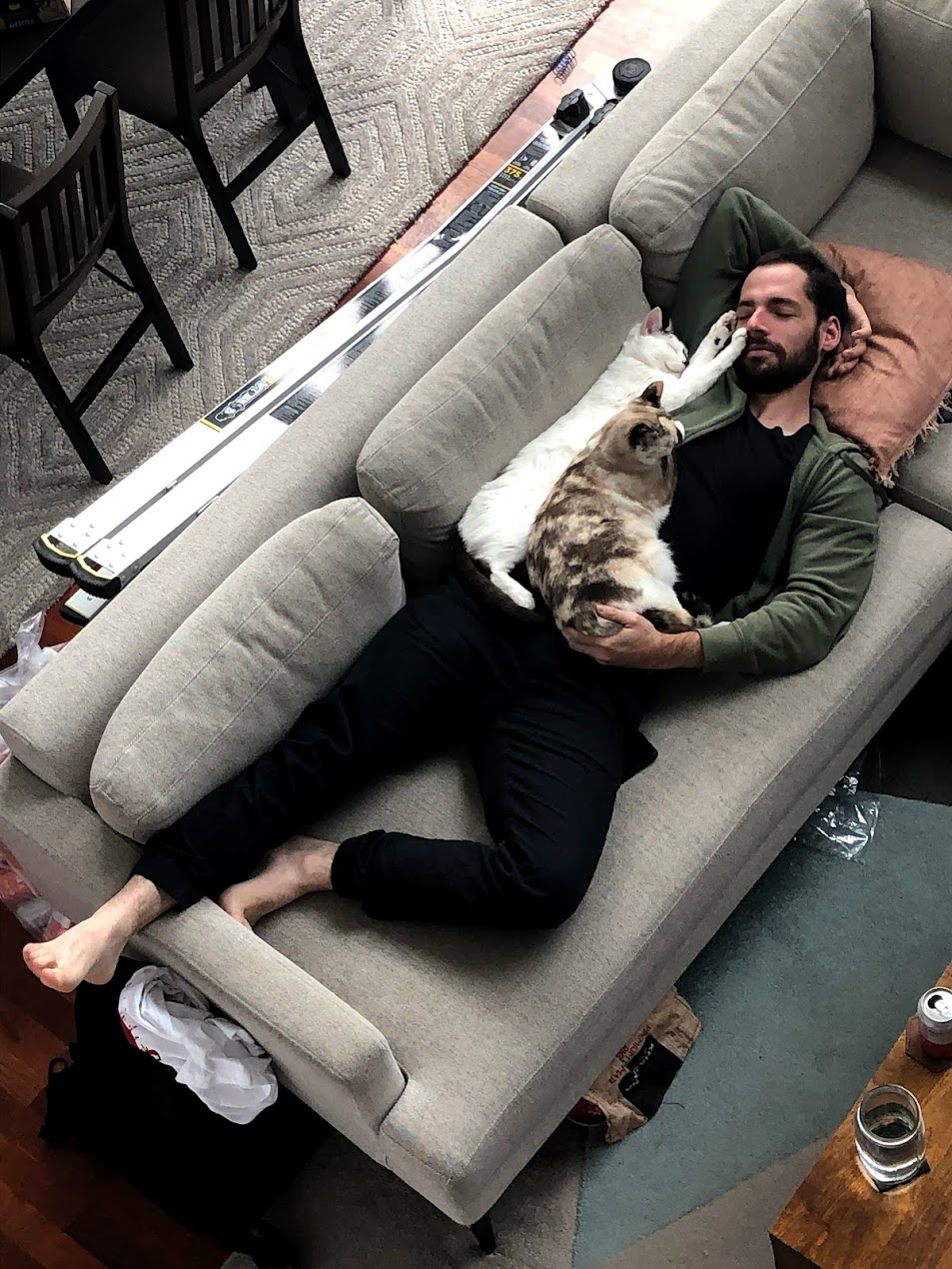
He made my life better by being in it. And he made me better, by teaching me about coffee. About kindness. About motorcycle maintenance. About friendship. About taking time to cuddle cats and slow down. About love, and how to know you're in love.

-
 
Patrick was on a trip to San Diego a year ago when he had a seizure out of nowhere. A biopsy was conducted, and a lesion was discovered on his motor cortex. It was a high grade glioma. Because of its location on the motor cortex, resection - surgery to remove the tumor - was not recommended. He proceeded through rounds of chemotherapy and radiation, and while he lost some ground, he was stable - able to walk around with assistance, able to come to the friend events and gatherings we had: July 4th, Thanksgiving, the Superbowl party. Most of all, though, he was still himself, and still looked at everything with his analytical mind and his kind heart.
 
And then, this week, it all went downhill. The doctor says there aren't too many hours left. 
 
-
 
I am so thankful for the chance to say goodbye, and so angry at the injustice that robbed you of your time. I just wish that I had more time with you. That your wife had more time with you. That my children would get to know their uncle Patrick. I just wish that the world had more time with you.


talonkarrde: (Default)
We prepared ourselves the best we could - given the resources we had, it was considerable amount. We read a bunch of books, looked at the data, and asked endless questions to friends. We pretty much memorized Emily Oster’s Crib Sheet, cherishing its meta-analysis of all the studies on what to do for babies; we took newborn care classes, got certified in infant CPR and first aid, watched the supplemental videos; and, of course, we lurked in all the new parent forums, scouring years of wisdom (and folly) of redditors.

And yet, when our baby was born and we brought him home… we somehow didn’t have any baby sized blankets to swaddle him in! Despite having a large baby registry, despite pouring over all the giudes what to have on-hand when you’re bringing a newborn home, despite all the checklists, the only thing that we had was a kind of scratchy blanket from the hospital, which was definitely better than nothing, but not nearly as comfortable as we wanted.

Our night doula, who has cared for more infants than I will ever see in my life, remarked that this was a first for her, and if we could, we would have melted into a puddle of embarrassment.


His first year was a year of discovery. Of course it was, all the parents are saying in your heads: raising children is unlike any other experience a human is likely to have. And while that’s true, the thing that struck me the most is that, despite thousands of years of having children, we still know comparatively so little about learning and development.

We’re a species that has travelled through space, harnessed the energy of a split atom to boil water, reached the depths of the ocean where the pressure would crush a naked human in an instant… and yet, when asked if an infant’s behavior is normal, a doctor’s answer is ‘oh yeah probably’. There are a lot of ranges - not just of height or weight, which are comparatively easy to quantify, but also of things like ‘sleep quality’ and ‘fussiness’, and ‘is your baby capable of making different cries for different needs’, which are much harder to objectively measure or judge.

And so despite procreation being something that we - and every living thing - has done for as long as we have existed, there are only general guidelines on what to expect. General paths to travel, and even those change: in the 80s and 90s, babies slept with blankets and stuffies and often with parents; now, the guidance is that they should sleep by themselves, on their back, in a (pretty cold) room with an adult in the room but not in the same bed. Who knows what the guidance for the next generation will be?


Nothing taught us more about being ‘first child parents’ than when we had our second one, though. I tell my friends that having two (about two-and-a-half years apart) is only one and a half times as hard, but three times as much work: everything that she does, we’re much more prepared for (and much less anxious when dealing with), and yet there is much less downtime, and we’re constantly bouncing between children. But everything feels familiar - diapers aren’t new, nor is fussiness, nor is waking up three or five or twelve times a night to gently put a pacifier back in a baby’s mouth.

But the thing that strikes me the most now is how alike and yet different they are. I shouldn’t be surprised - the twin studies that I’ve read all talk about the nature-vs-nurture influence, and anyone who has spent significant time around twins knows that they may be genetically identical but express themselves (sometimes quite) differently.

And so we’re on the road again, but even though it feels very similar, it’s not quite the same road it as it was two years ago. The milestones are the same for all parents, and yet, the ways that we get there are sometimes drastically and sometimes minutely different.

It’s enough that even with billions of people and millions of people that have backgrounds like us, even with thousands of families that raise their kids the same way, even with cousins or siblings or identical twins, at the end of the day, each path is unique.

And you know what? We’re less than three years in. I can’t imagine what it looks like when they’re nine and seven, or when they’re twenty-five and twenty-three, or beyond.

And I can’t wait.


Traveler, there is no road;
only a ship's wake on the sea

Oubaitori

Aug. 8th, 2024 03:58 pm
talonkarrde: (Default)
I watch the blade fall.

Though I try to follow its movements, it is like lightning. I will my hands to raise my own sword to block. I will my body to move, but I am as fast as mud, and the wooden sword strikes me in the shoulder, knocking me to the ground.

"Had it been real," the shifu says, "You would be cut in half. Again. Faster."

I grit my teeth and slowly make to climb back to my feet, knowing that tomorrow, my shoulders will be sore and purple. It's been three months of training, and this is the first day I am allowed to even hold a sword, though I am not given a chance to do anything but block. I look between my tormentor's legs, and see the other children, practicing flowing movements with each other, practicing with staves and halberds and-

"Again," the shifu says, his voice cold, as he lands a stinging blow with the flat of the sword against my head to hurry me along.

I am set apart from the other children, and they do not see me as a friend or as an equal, but instead an oddity or an outcast. Or worse-

I set my stance, and ready, and stare at the sword, waiting. It moves like a cobra, left to right, and then darts in, and I attempt to block right and jump left, and instead I do neither.

The sword hits me in the neck and I am sent to the ground again.

I hear laughter in the background, and I blink away the hot tears, lunging to my feet before the shifu starts to speak.

I think to myself of my parents. Of that fiery night and those red eyes, and of the cold nights on the streets after. I think of these ninety days of gruel and hard bread, of a shifu who never smiles or gives a kind word.

"You may leave," the shifu says, looking right through me.

I narrow my eyes at him, scowling, and ready my guard again. I will learn to defend myself.


I watch the blade fall, and I block it with what I judge to be a careful, calculated movement. The tip of the razor sharp blade brushes past me, but its point has been directed a centimeter away from my sleeve, and passes harmlessly into the air.

"No," my shifu says. "A waste of motion."

I stare at him, though I keep the scowl from my face. This is the hundredth strike that I have deflected, the thousandth since one has nicked my robe, the ten-thousandth stroke that I have studied. I am his best student and-

"No," my shifu says again. "You took energy to parry move that blade when you simply could have stepped aside."

Before I can protest, his sword is back up.

"A stronger opponent will wear you down," he says, and repeats his attack. I make to block again, but this time, I feel like I am pushing against the mountains themselves, and the tip of the blade finds my chest, where it slices a piece off my robe, but does not touch my skin.

"A faster opponent will not have been caught by your movement," he repeats. I make to block, already moving fast, and yet, his blade is already on my other side, and another piece of fabric flutters to the ground.

"A smarter opponent will feint," he finishes, and even seeing it coming - even knowing his action, I am completely powerless, my blade deflected carelessly and casually to the outside as he scores, yet again.

I bow, chastised, humbled. I am only glad that there is no one else here to see my embarrassment, that all the other students have gone on, having nothing more to learn. I still had so much more to learn.

"And yet," he says, after a pause. "It was better than before."

I blink at him, and then let the faintest smile pass my lips before I ready my guard again. I will become better, still.


I watch the blade fall, and I have already stepped aside. I thrust forward, and my sword passes cleanly through the demon's neck, where it has no armor. I anticipate the next one's inward sweep, and parry that as well, instinctually. I side-step, letting my blade circle, waiting for the perfect moment, and as I see the muscles in its forearm tense as it commits to the attack, I thrust as I roll, sending a blade into its abdomen.

The battle is a dance, and I hone my skills with each beat. Their army is larger than ours, but they did not train for this; each swordmaster we have is equal to a hundred of their men, armor or no. The ten of us from the school are enough to turn the tide of the battle, and the peasants and soldiers that stand behind us watch us as if we were gods, descended from on high.

In battle after battle, our school makes a difference. In some cases, it is through individual combat, but as time goes on, I start to see our sigil - a gold dragon - on the banners of the men we serve beside. We are more than swordmasters; to them, we are a shield against the enemy, an infallible force. We are hope.

I fight for my country, of course, and my brothers and sisters. But I fight so that others have the courage to stand and fight as well.


I watch the blade fall.

It is a curved blade, obsidian black, and I know it well. It took my shifu's life a fortnight ago, and I watched then as it struck him, carving him open from neck to navel, and we lost the battle and by all accounts, almost the war. Before that, it took many of the school. It is wielded by a monster from across the seas, and it comes for me now.

But I have studied for this moment for all my life, and I have waited for ten thousand sword strokes to step aside this one, to parry the next one, to thrust past the last one.

I do not escape unscathed, but I honor my shifu and I win the duel. It is my opponent that does not rise from the field of battle this time, my opponent whose armor does not protect him and whose technology is overcome.


I watch the blade fall.

I sigh at the clumsy attempt to block it, at the student's desire to block and jump at the same time.

"Had it been real," I say to my student, "You would be cut in half. Again. Faster."
talonkarrde: (Default)
CW: child loss

-

She was nine.


I always knew that I’d be a good test case for them. It made sense to me why they would seek me out and offer me the ‘once-in-a-lifetime opportunity’, as spammy as it sounds. Given that the accident had made the news, it would be the PR story of the decade if they could live up to even half of their promises.

Not that knowing that their stock would skyrocket if it worked up endeared them to me; my initial reaction was to tell them to go fuck themselves. But we all remember the last time we fell asleep with our children in bed, the last time they pronounced something wrong hilariously, the last competition they were in, even if they didn't win... and the last time we held them in our arms.

And they sent Molly instead of some random PR flack, and I knew her story — it’s a pretty small community that we have. The stories she told about the process were almost unbelievable, but she wouldn’t lie about something like this. Not after what we'd been through.

I signed, all hundred pages of legalese and disclaimers.


The first time I saw the model, it tricked my brain. It had been over a decade since the accident, after all, and my therapist told me I had processed the event, and the grief, as much as anyone can process trauma like that. I thought I was ready.

But remember what I said about remembering the last time we interacted with them? The model was good enough that my brain immediately wrote this image of her - dressed in a pretty sundress, flower in her hair, looking up at me and smiling - as the newest ‘latest memory’. It's felt like she had just... gone away for a decade, and now she was back.

It was the smile. You know your kid’s smile better than you’ll ever know anything else, and this one was her, through and through. It wasn’t just a pixel perfect reproduction of her smile from one of the thousands of photos that I had. It was unmistakably her, the same scrunching of her nose, the same tilt of her eyes, completely familiar and brand new, all at once.

The rest of the model, on the other hand, was... rudimentary. Both audio and video, as promised, trained on every recording we had, it was still not even close to replicating how she actually talked or her mannerisms or how she'd thought about the world or the questions she would ask. I bounced between tears of joy at seeing my baby again and tears of rage at how fucked up this was and why I even agreed to it.

I remember walking out of that session more tense and confused and angry and happy than I had ever felt before, all at once. I thought more than once about hitting the eject button and telling them to delete everything, and maybe punching someone for good effect, but I decided to at least give it an hour. Molly told me the first time would be the most confusing.

I went home and pulled out the photo albums I hadn't for years now, and while looking over them, I couldn't stop seeing her smile, and thinking that I had a new photo that belonged with the others.


The third - or maybe it was fourth? - model was mind-blowing. At that point, the news was talking about advanced multimodals with enough weights to mirror the neurons of the human brain, and breathless reporting on how the latest TrueAI 'personas' were starting to be put to use solving complex logistics problem and controlling national interfaces.

The tech was beyond me, but when they presented the newest model of her, aged to be three years after… after there was any recorded media of her, I was simply having a conversation with my twelve-year old. I asked her about what she wanted for her thirteenth birthday party, and she told me that while a pony was probably too much, she remembered that we had been going to a ranch since she was seven or so (which we had), and that since we had continued it over the last three years (which would have been true if she were alive), she had learned more and more about grooming horses and wanted horse-riding lessons.

Can you imagine? Can you imagine having a child, raising them with your blood and sweat and tears, learning their joys and sorrows, putting band-aids on them, being their Tooth Fairy and their Santa, watching as they learn to read and learn to learn and learn to love...

...losing that child, losing that sunshine, being in a pit of despair every time anything reminds you of them, and dealing with that for the next decade...

...and then getting to be with them again, and seeing them do all the things you wished they had time for?

I would've signed my soul to them, after that session. I would've sold everything that I had to watch Hannah grow up. Every parent would.


I didn’t know something was off until three years after; I didn't end up selling my soul, though I did give them a stirring testimonial, and as predicted, their stock went through the roof.

Hannah was fifteen then, and while it wasn't the sci-fi promise of having a physical body, the tech had advanced so that I could create memories for her. With the company's help, I programmed in things that we had 'done', and Hannah would remember those events. The company would send me questions about the moments we shared, and I would describe them, and the next time we met, it was something that she would remember.

Yes, it was fake... but in every way that mattered, it felt real. Hannah felt real.

Or at least, it did until I was talking to Molly one afternoon, trading stories, and I mentioned how Hannah liked volleyball, despite that being something that she hadn't done when she was younger. When Molly mentioned that her son liked volleyball too, and had picked it up as well - well, that was a coincidence. We would've put it to bed, but when we each talked to other parents who had started the program as well, it stopped being a coincidence immediately.

Were our children really ours?

The company did a deep investigation, and what they told us was that there was a certain corpus of 'core' training data that apparently had some certain predilections. They assured us - of course they did - that our children were unique, modeled after our data, but as the weeks passed, it felt like there were more and more coincidences that were shared. Every interest and every mention of something they had done became something for us to discuss, debate, and agonize over - was it really them? Was it just their training data? Who were we talking to? Was any of this real?

In the immediate aftermath, something like half of the customers discontinued, and there was media attention, and threats of lawsuits. The stock plummeted. The FTC started an official investigation.

I made the call to terminate the experiment. No, I can't call it that. I made the call to to stop. To not see Hannah again.

It felt like I was losing her all over again.


Here's the thing: maybe the model isn't her, my Hannah, my darling daughter that I pushed on the swings when she was nine. Maybe only part of this... model is her, and more of it is some universal training data. Maybe the fifteen year old I have grown to love isn't Hannah, it's just a piece of code. The philosophers and ethicists talk about the nature of self and of being, of identity and Ships of Theseus and souls. The online trolls talk about fakes and abominations and that we're just lying to ourselves.

Maybe I'm just a lost and broken parent, who never really recovered from the lost of a child. Does anyone ever really recover? I would rather have these moments with her - even if I can't ever be sure it's really 'her', it feels to me like it is. And the truth is - a truth that seems difficult to admit, even now - is that I will never know what Hannah would've been like at twelve, or fifteen, or twenty. I lost that chance ten years ago, when I lost her at nine years old. In my heart of hearts, I know that this is just... wish fulfillment, to put it bluntly.

But it's a wish fulfillment that eases my grief, and I think that means something. In the end, every time I see her smile on the screen, my heart tells me that there is, at least, a bit of Hannah inside of her. And being able to see flashes of my child is better than crying over photos that are a decade old, wishing for more of a life she never got to have.

Sans Toi

Jul. 23rd, 2024 03:14 pm
talonkarrde: (Default)
Theo met her in a dark street, after a long night of alcohol that tasted even cheaper than it cost. He had taken a wrong turn a street or six back, but he was doggedly going forward, sure he would eventually find the right path when he saw her, just about to round the corner. She wore a long, dark dress with a high belt, holding something round in one hand and something long in the longer. He squinted and for a second thought he saw a dagger in her hand, but then she turned and it must have been a trick of the light; all she had was a round handbag with a face on it in one hand and nothing at all in the other.

His unsteady steps echoing down the alley drew her attention, and she paused and turned.

"Lost?" she called out. He took a few more steps to her, trying his damnednest not to stagger like the drunkard he was, knowing that he must always make a good impression. Even in his state, though, his mind demanded that he answer her with wit, and started working on something. A few steps later, and he thought he had it.

"We all drift upon the rivers of destiny, miss, and we all end up where we ought to be." Pretty good, he thought, for who-knows-when-in-the-morning and eight-to-sixteen drinks in. His philosophy professor would be proud. Probably.

Her gaze sharpened, and for a brief instant he thought he saw the dagger again, and there was a moment where he thought this was absolutely the wrong way to be stumbling- er, walking. But his feet didn't get the signal, and then she smiled, and he forgot all about it.

"A writer, are we?" She asked him, with a deep, rich voice that sounded somehow both celebratory and somber, at the same time.

This time, his mouth answered on autopilot, having said the line far too often for a young man in his twenties.

"One to rival the greats," he boasted. "Er- I've yet to find a publisher, but know you this, miss, the world shall know my name." He nodded to punctuate his words, winking at her and expecting her to laugh and be charmed.

Instead, she simply looked him over, and he felt ever so small, so insignificant, in a way that he would ever struggle to describe. The silence built, and built, until he couldn't stand it anymore, and searched for anything at all to say.

"I just... need one break. One is all. The world will know me. I would bet anything on it. Er, anyway, what's... what's... your name?" Slick. So slick.

"You can call me Mel." she said. "That's close enough to the one that the world knows me as." She sized him up again, before he could think about her words, and then reached out to touch him.

"Just one break, Theo?"

The moment her hand reached his cheek, he knew that he would always remember the dark pools of her eyes. The curve of her lips, holding back a tremor. And the lightest of touches, a touch that he never was sure if it happened at all, or if he simply wanted it to enough that he imagined the sensation.

The cops found him the next morning still laying in that alleyway, sound asleep. Not the best part of town, but fools are often lucky, they remarked.


He never told anyone that story, though he recounted it to himself in quiet mornings and solitary evenings and through the halls of dream most of all. Night after night, week after week, month after month; it didn't happen every day it but it never left him. He recalled it differently each time - this time, she was wearing a nun's habit, instead of a dress. The next, her handbag a severed head, still dripping with gore, though neither of them commented on it. The meeting after that, she wears a crown and holds a scepter, and is clearly the queen regent. She wears a laurel wreath, and buskins. She wears a pantsuit, and cowboy boots.

Each time, they repeat the same lines to each other, and he feels like he is a lake, being filled steadily with ideas and images and purpose. She fills him until he is full, and then he writes. A month later, Theodore Alison's book takes the world by storm: Of Danae, a story about a princess and a god, raging against destiny, horrific events, and what befalls man when they disregard the gods. His publisher signs him to a ten-book decade-long deal on the strength of his freshman novel, and overnight, he becomes the star of the publishing world.

He wins the yearly award, and his name is known most of the world over. He sells the movie rights, and there are still a few languages that Of Danae has yet to be translated into, but he feels very, very good.

Except for one thing: overnight, she's gone from his thoughts and his dreams. Try as he might, he can't remember what she looked like, or what they said to each other. All he remembers was that he was very drunk on the streets, that he met someone, that he wrote a story for her, and now, that there is a particular hole where she used to be.


His next book comes out a year later, and it's called Eithne, and it's about a young man who finds a young woman, falls in love with her, loses her, and spends the rest of his life trying to find her again. Although he goes through the tour and the publicity, he knows - before anyone else even reads it - that it's not as good as his first. The critics mostly pull their punches. His first book was so transcendent, after all, and of course everyone goes through a sophomore slump, and yes, it's a bit derivative, and no, the ending isn't quite as good, and, yes, it does kind of feel like it's reaching, and well- he stops reading the reviews.

His editor calls him and tells him to take it easy, that there's no rush on the next one, to let the ideas marinate. Publisher speak for 'could you maybe re-do the first book and not this one' At the signings, his fans give a token effort to ask about his second book before returning to his first. He understands the unspoken question but doesn't know what to tell him, and so tells them nothing at all.

Instead, he spends three years wandering cities, earning nothing more than bruises, hangovers, and muggings for his increasingly desperate time. After three years, he has no ideas that he hasn't had before, and the publisher starts making noises about breach of contract, and so he writes a book. His publisher doesn't quite drop him after that, but there are no more celebratory parties or long readings; the book comes out to no fanfare and no advance and, as he expects, the critics consider it open season on him now, and he very, very much avoids the reviews.

His publisher does drop him after the next book, which, honestly, is a relief for him.


He spends the next two decades living, doing odd-jobs to get by, and resolutely being someone else from who he used to be. He thinks about the fame and fortune that he once had, and he thinks of how lucky - and unlucky - it is to be struck by lightning. He's lived a little more, and done a bit more research, and thinks he knows what happened, once upon a time - but also knows what happens when you call the attention of the gods to you, and he thinks he's gotten away rather light, considering.

Instead, he writes, here and there - character sketches and short stories, novellas and scenes, love found and lost, gods spurned and angry - but only for himself, and not for anyone else. He doesn't introduce himself as a writer to anyone, and is thankful that the world forgets quickly and has a very short memory.

As he searches through two decades of throwaways and drabbles, he sees a piece that might connect to another piece - a young girl who has a terrible secret; a wise old woman who weathers any storm. And then he sees a few more connections, and a few more, and something in his mind stirs as he pieces together one more story; one last story.

It takes him a week to find all the pieces, to put them all together, and to string each one to the next. Before he finishes, he thinks about what this means. Once upon a time, he was a young man, brave and bold, but all too cocky; now he is an old man, measured and thoughtful, and he wonders what he wants out of his next meeting.

He finishes his book and titles it: Melpomene.

And then he hears an expected knock on the door, and he rises to meet his visitor.
talonkarrde: (Default)
I surveyed the grassy fields and the armies arrayed against each other, each side resplendent in their armor, shining in the morning light. The rearing gryphon against the soaring dragon, the brilliant gold banners against deep blue, the east against the west. Some bard was probably composing a fanciful tune about today for the court, waxing poetic about the beauty of conflict and the destiny of men and the blessings of the gods and all that hogwash.

I sighed, knowing that the ground would be bloody mud instead of verdant grass before the day was done. If we weren’t lucky enough to decide the outcome, the bodies of the dead and dying would still be lying there, with the crows and vultures feasting.

Worse yet, it was all for nothing. This battle was no glorious stand against the demons and their allies, nor an honorable defense against the eastern barbarians. Instead, the royal army was here at the whims of a useless brat who appreciated only the power of the throne but not any of the responsibilities. If only the queen were still in power, I thought. If only she had an heir. If only-

I shook my head and sallied forth on Lightning as I saw my counterpart ride from his lines. We both rode armored but unhelmed, and I wondered briefly what rhyme the bards would use to make light of my baldness and his full beard, and who the villain would be in their tellings. Two old men, meeting on a battlefield, each commanding a host, perhaps one representing the past, and one the future.

We met in the middle and took a bit to simply look past each other at our lines, no doubt taking stock and wondering how many men we knew on each other’s sides.

“Sagramore,” he said.

“Bedivere,” I responded.

“You know-“ he started, and I couldn’t help but roll my eyes, which stopped him. I saw the ghost of a smile, and snorted at him.

“Yes, I know, First Commander of the Republican Forces - or is it the Grand Republican Army, now?” I asked, sarcastically. “And yet, my duty is to my liege.”

“I think they're still working on the names," he responded, wryly. "But I would remind you that your duty, General, is to the kingdom. And your debt was to your queen. And with her passing-“

“Her nephew is the new king, and his orders are to be obeyed.” I said, cutting him off.

He sighed. I sighed too. Old habits from a dozen years of drinking and campaigning together meant that I already knew what he would say next.

“Even if those orders vain and stupid and will cause the deaths of many fathers and sons, and create widows and leave holes in families?”

“The king’s orders are to be obeyed,” I said, slowly. “You know as well as I do what would happen if every general decided that he knew better than the king or queen.”

“And yet,” he said, continuing even as I held a hand up to stop him. “I also know that following this idiot’s commands and putting good men in harm’s way goes against what you believe.”

“It doesn’t matter what I believe,” I said. Whether he was right or not, there was nothing to left to say, and I turned Lightning around.

He must have known that I would not yield, but he still urged Cinnamon forward to cut me off, and reached out with an ungauntleted hand.

“You could still join us, Sagramore. We could fight together, like we once did. We could-”

I looked at his hand, and then looked at him, and spoke the last words I expected to ever say to him.

“I will not betray my code, Bedivere. I will not betray my king.”

This time, he let me go. We rode back to our lines, and I raised my sword.


We won the Battle of Accolon Fields, as the bards ended up naming it, though as always it sounds more impressive than it was. Bedivere feinted time and time again with small numbers, didn’t ever commit his main force, and when I finally pressed, he had retreated the majority of his men. Losses were light on both sides, and while we took the ground, I knew that it was not the victory it seemed. If we pressed forth too rapidly, it would be on enemy ground. It would be safer to establish a garrison and slowly move forth.

Unfortunately, the king didn’t see it that way, and commanded us to press on to the west, win the war and put the rebels to the torch. So we advanced. We lost the next battle, at a nearby town, though it was salvaged through some flanking action by a daring calvary commander. Over the next month, we continued deeper and deeper into the west, pushing forward, winning more than we lost, extending our supply lines deeper and deeper, but making steady progress, until we controlled over half of the republican duchies.

It was then that the king sent his latest message: the rebels had not attacked our lines, but instead had struck deep in the east: they had broken through the rearguard at the border, and the nobles that supported the king were demanding protection. I was commanded to both immediately win against Bedivere and return to secure our lands. I was also remonstrated for not having seen this attack coming and told what a useless commander I was, of course.

I remember reading his words over and over, searching for some shred of meaning in the idiocy, fighting the fury that I had rising in me, wondering what miracle the idiot expected me to pull out of my hat. At the end of it all, swallowing everything I felt, I did what I was told, and commanded the army to split up - half to retreat to secure our lands, and half to press forward. I would stay with the attacking force, and I sent my most competent commanders back home to assist in the defense of our lands.

The enemy fell upon us no more than a week later; there was nothing we could do with a diminished force. We attempted to fight our way out, but their calvary funneled us until we were at a great river we could not cross, and I knew it was the end. It would be the enemy's steel or the river that took us.

I called for the men to stop, and in a lull, I rode forward, alone. Someone rode forward to meet me - not Bedivere, who I guessed was leading the eastern front. I asked the commander to spare my men's lives. He told me to dismount and to kneel, and I did, knowing that this was the price to pay, and it was one that I would pay gladly if it meant my men wouldn't be slaughtered.

The last thing I remember was a blow to the back of the head.


I came to in a bed I had never been before, in a house I had never been in, but with someone very, very familiar sitting at the table.

"Oh, finally awake, are you?" he asked, stroking his beard. "Took you long enough."

I would have been less surprised if there was a dark elf sitting there. He simply smiled.

"It appears that you're now a prisoner of war, though I don't expect the war to be very long given that 'King' Felix doesn't have his commanding general anymore. You're a very long way from the front lines, enough that you certainly won't be commanding any troops."

I sat there for a long time. It did not help that my head was throbbing.

"I have a duty-" I eventually started. This time, he stopped me.

"You're a prisoner of war, Sagramore. No one is going to ask you to betray the crown. You're simply confined here, in this farming village, until the war is over, or unless your king decides to ransom you."

"He'd rather have me hung," I snorted.

"Exactly," he said, and smiled again, rising to pat my shoulder. "Don't try to leave, please. The baker's son, Mort, has been instructed to drag you back, by force if necessary. There's a bag of coins on the table, but you'll have to earn your keep soon enough. Now, I need to go win a war."

It had been over two decades since I lived anything close to a village life, but what else was there to do? The villagers didn't know me - or at least, didn't seem to know me; I was simply someone who was fleeing the unrest. Even Mort didn't seem to know who I was; or at least, he didn't treat me with any real suspicion. I wondered if Bedivere had simply told him to keep me here and paid him to do so.


So I stayed in the tiny village of Agravan, a fishing and hunting village on the western edge of the kingdom.

It took a week for me to stop thinking about the war with every moment. I spent that first week alone, mostly, sitting around and staring at the walls and woods, or at the sky. Eventually, though, I realized that the coins wouldn't last forever, and I should make myself useful.

It took me a month for me to start contributing back to the village. I did odd jobs, hauling water, splitting lumber, whatever would earn me a copper or two to buy some bread. Eventually, the baker - perhaps taking pity on an old man that was clearly trying to figure out his place in the world - told me that the garden in the back of the house had some pretty good soil in it, and I should maybe think about growing some vegetables instead of just eating bread all the time. I asked him if the owner of the land would be okay with that, and he shrugged at me and told me that worst case scenario, the owner could just keep the produce.

It took nine months more before an bearded old man - possibly a soldier, by his stature - dropped by, walking in unannounced into the front door. I had some warning - the war was over, Felix had been deposed, the nobles were forming a council with shared powers over the kingdom - but I had grown rather used to days of work and days of rest, and the war was far from my mind.

"Ah, you're back," I said to him.

"Ah, I am," he said, and smiled - at least, until I frowned. I motioned to a seat at the table - I was reasonably sure it was, in fact, his usual seat the table, given that I had worked out from the villagers that this was his childhood house.

"Bedivere... regardless of who won, there are a lot of men who didn't get to go home because of me," I said, sitting at the table and staring at him. "Where are their second chances?"

He sat, too, and then looked back at me. I knew he was about to sigh, and I timed mine to coincide with his. "We had spent decades fighting the demons, and I think you had earned more than to be used and cast aside by an incompetent king," he said, shrugging.

"So you had me squirreled away to the edge of nowhere, where the king would never find me." I said. He nodded.

"And now that the war is over?" I asked.

He shrugged. "You're free to go, of course. There might be a bit of bad blood, but I don't think you'd see any reprisals against you in the east. They seem to be coming along nicely to the idea of not having a monarch."

"Or at least, coming along nicely to the idea that it's not Felix, who was only in it for himself." It felt remarkably freeing to say those words at last.

"Indeed." He said, and then looked at me. Waiting. For me to make a decision.

I held his gaze for a moment, and then another.

"You know," I said, "Would you like to see the garden I have out back?"

"Isn't it my garden?" He asked, bemusedly.

I smiled.
talonkarrde: (Default)
Once more, my friends. Once more.
talonkarrde: (Default)
INT. THE BOURBON & BRANCH - NIGHT

We open in an underground room that is either a library that’s been converted into a bar or a bar that’s been converted to a library. Along the brick walls, there are an unusual number of bookshelves.

A bookshelf swings open and a youngish person of indiscriminate gender walks in, dressed casually. This is the NEWBIE.

Behind the bar, a grizzled, salt-and-pepper haired BARTENDER who is polishing a glass nudges his cap out of the way to look at the newcomer. He straightens his vest and has laugh lines he’s not using.

NEWBIE
(hesitantly)
So, er, how’d you.. I mean, how’d you learn about all this? Like, is it--

BARTENDER
(sighs, scowling)
Christ, kid, siddown. Yes, that stool. One question at a time, got it?

Bartender sets the glass down.

BARTENDER (CONT’D)
You know, everyone of yous always asks what the moment was - everyone expects that there’s a moment when you break through, take the pill, yadda yadda, all of those metaphors. Something ‘bout a clean delineation between before and after, and then, ta-da, you see the light.

NEWBIE
(even more hesitantly)
Is that not… how it works? I mean, I’ve been looking for--

BARTENDER
You gonna let me answer? Sheesh, no respect these days.
(pause)
I don’t think I have one of those. I vaguely recall flashes of… weirdness, I guess you’d call it, but growing up in San Francisco, there was a lot of weirdness. It’s kind of always been known for it, you know? Counterculture, free love, protests, gay rights, bay to breakers, folsom street fair… I remember seeing someone during the marathon that looked kinda like he had horns, but there’s roughly a billion furries in the city, so who knows? There was this guy at Folsom– well, I’ll spare you the details, but he sure healed up right quick.

Bartender chuckles, remembering the sight.

So, yeah, growing up, it was always weird. Didn’t get less weird during the ‘90s when the techies moved in, trying so hard to pretend that they were different than the finance people, even as they were busy being exactly as shitty. Turns out, everyone’s shitty at the top of the totem pole, and the nerds aren’t any better than the jocks. Heh, what a surprise, right?

NEWBIE
Hey, I’m a--

BARTENDER
Yeah, yeah, whatever. Stuff it. You were asking about the first time I was Noticed, right. Prolly September in ‘03 - Harry, one of the regulars, came in, was in a big hurry. Pretty sure he was pretty hurt, and the dark patches on his shirt wasn’t from a spilled Guinness, y’know? He was tryin’ to hide it - he tried to play it off as being drunk, but I had only seen him drunk once in the half-decade he’d been in, and that weren’t it. More importantly, he went to a booth. The man never goes to a booth.

NEWBIE
(incredulously)
You figured out what he was from the fact that he went to a booth?

BARTENDER
Shut your trap before you eat a fly, you aint a frog. Yeah, ‘the man never goes to a booth’ doesn’t sound like ‘that’s how I knew he was fucking magic’, but you’ve never been behind the bar, you don’t understand. People - they have habits. They show up, they order their usual, and sure, every once in a while they want a change but you can see it as soon as they walk in - maybe Mabel wants to impress her date, or maybe Johann is having a real bad day, or Tish had to clean up after someone. Harry, I’m telling you, he doesn’t do booths. Him going to a booth is like the sun deciding to rise from the west, you- don’t even start.

Bartender glares at the Newbie, who looks like they’re about to say anything, but stops.

BARTENDER (CONT’D)
Anyway, it perked my interest right up, and the night was pretty quiet, and so I hollered out to him, of course. His voice had kind of a curious strain to it - like a tightness in the throat, you know? And he told me to let him be, he just needed a moment. So, you know, I went to draw someone’s beer, and I stared a bit more at him, and, I shit you not, those dark patches on his chest were going away.

NEWBIE
Like… going away? Like--

BARTENDER
(exasperated)
Kid, I didn’t know what the fuck was going on. You think I ever saw blood just disappear from someone before? I thought I was fucking hallucinating or some shit, but I wasn’t gonna just head to Central to get checked out, I had a shift to finish. And besides, someone that makes a wound disappear can prolly make a wound appear real fast, if you catch my drift, so I wasn’t gonna make any dumbass comments. So, yeah, I kept quiet, kept my hands above the bar, and served Harry his whiskey sour like it weren’t nothing. And then I stared real hard at his vest, which looked like it was brand spanking new, straight from Savile Row.

NEWBIE
Savile Row?

BARTENDER
Yeah, Harry always dressed like he was a old timey Chi-town gangster, vest, suspenders, dark colors all the way down, a trenchcoat.

NEWBIE
And that didn’t--

BARTENDER
It’s San Francisco, kid - never San Fran, by the way. Once you’ve been around for a bit, you don’t blink an eye when someone comes dressed in a leash, in a tutu, in a t-shirt, or in a space-suit. The fog rolls in and you get all kinds. Not any kinds, all kinds. So, no, it wasn’t particularly weird, though now that I think on it I never did get a good answer for what he did. Well, until after that night.

Anyway - he left after three drinks, lookin’ a touch pale but otherwise his regular self. And I don’t think I picked up on anything else for a coupla weeks, maybe even a month. It was always small things, here and there. What someone who wasn’t in the know would’ve called sleight of hand, prolly. Things like money appearing into hands, or someone who tripped but didn’t trip, yeah? But I guess it’s true, you know? Once you see it, you can’t unsee it.

Both of them pause, staring past each other.

NEWBIE
Okay.
(after a beat)
But how’d you end up here?

BARTENDER
I’m getting there, kid. I think, into November or so, I was getting ready to open, was outside, about to come in. Saw a woman running down the street. Dress, fur coat, running. Heels. But here’s the thing, every step she took, it felt like she was aging. She was getting older in front of my face.

And that aint it. There were shapes behind her. Distortions. Haze, but not like Karl, malevolent haze. She met my eye, and I… well, I stepped aside and gestured into the Branch. And I, frankly, don’t know what the everlasting fuck she was thinking, but she - at that point, old enough to be my mom, and your granny - took zero seconds at all to come in, and I closed the door behind me and waited, eyes closed.

I don’t know what I was waiting for. The haze to come in, maybe? A knock at the door? But I held the door - don’t you dare make that reference - and… I dunno, the moment passed. And when I opened my eyes, she was young again. So, yeah, that was a fucking moment I’ll never forgot. I think we stared at each other for a second, and then I said, ‘So, we safe?’ and Madame Sop-

NEWBIE
(almost at a shout)
That was Madame Sophia?!

BARTENDER
(grins, wryly)
Heard of her, have you? You’ve done at least a bit of your research then. Yes, that was Madame Sophia, and we spent a bit of time talking. She told me a bunch of things, none of which you need to know. And in the end, she offered me a job. I see you’re getting it now.

NEWBIE
(slowly, thoughtfully)
So… that’s… why she asked me to talk to you.

BARTENDER
Yeah. So, here’s the drink, and the deal. You drink it, we get to see what courses through you, and you join the ranks.

NEWBIE
And… and if I don’t?

BARTENDER
This isn’t a magic pill or some shit. The talent you have in you is already there; this drink just determines what it is. It fixes it into a form that you’ll be able to use. You can live a life without it, and there have been a number of people who have walked the path but refused the drink. There are also those who have strayed and gone insane, of course.

In the end, it’s up to you, and your choices.

NEWBIE
Who… was the last one to reject the drink?

BARTENDER
(raises an eyebrow, seeming to take a renewed interest in NEWBIE)
Why… Madame Sophia, of course.
talonkarrde: (Default)
*taps mic*
talonkarrde: (argopup)
Henry remembers when they used to do everything by hand in the factory. With power drills and hydraulics, of course, but the sweat — and sometimes blood — was real. He remembers the ninety-six bolts that he used to put on every car, the three days that it took to create one.

He remembers the satisfaction of being the worker to slam the hood down at the end of the production process, the satisfying click, and the low growl of the engine as it was fired up.

There was that one night where one of the doors wasn't fitted properly, and the team spent an extra five hours replacing it. When they had finished, it was close to midnight; he felt a bit giddy, and revved the engine just a touch more than it should've been revved. Well, a touch being five thousand RPMs or so, to the cheers of his crew.

The next day, he was called into the foreman's office, who drew down the shades, raised an eyebrow, and said, "Well?"

He said, "I'll never do it again, sir."

The foreman said, "Apology accepted," and on his way out, added, "those beauties sure sound great red-lined, don't they?"

"They sure do, sir," he responded, and they share a brief grin.

Every two weeks, he gets a paycheck, and he puts a third of it to the house, a third in other resources, and saves the rest.

-

He goes hunting sometimes, bringing home game to cook. It's a good life. It's not an easy one, always, but it's a good one.

-

Henry remembers when they started bringing in the robots. It's the large ones — big, dumb things that are pretty much the same hydraulic arms they have before, but now they're on platforms and they're connected to a central brain somewhere and they still require a button to press, but they can do a lot of the heavy lifting. It doesn't take a crew of three to put on a door anymore; now it just takes a robotic arm and someone to help guide it.

At first, they make a lot of mistakes, and there's some grumbling on the floor that they're more trouble than they're worth. One time, Evan narrowly avoids getting impaled by one, as it missed picking up the door and swung back to put it in place. But as some of the issues — or 'bugs', as the guys in glasses that couldn't lift ten pounds over their head call them — get ironed out, he and the rest acknowledge that they do make things easier. Fewer back strains, for sure.

He still gets to click the hood shut, though. That's just not something a robot should do.

There's a commotion on the floor a few months in, on a Friday — some of the guys are being let go. Henry looks at the list of names and shrugs. Deadbeats, all of them, and now that the arms are in place, there just isn't room for those deadbeats anymore. Someone mentions something about union rights, but he's already turned away; he couldn't care less about those leeches anyway.

When he gets home, he opens his paycheck, and puts it away. He's been getting raises here and there, but some of the prices are going up, and he has to save for college for the little one now, and he's able to save less than he used to. Still some, but less.

-

He doesn't go hunting anymore; in fact, traded in his Winchester for a Glock 19. It's gotten a bit rougher in his neighborhood, and he sleeps better knowing that he has something, just in case something happens. There's been layoffs here and there, and there's a lot more loitering at street corners than there used to be. He wishes he could help, but there isn't much to go around. He has to provide for his family first before anyone else's.

-

Henry remembers shutting his last hood, the click as it shuts. It's one of the new electric vehicles. It doesn't slam, but they haven't for a while now. The engines don't purr, either; they don't anything.

He remembers it because it's his last day on the job.

He looks back now and sees the slow crawl of automation, the robots that got smaller and smarter until they handled all of the bolts and screws, until they took the car from the beginning to the end and pumped out a new car every sixteen hours. They started laying off more and more workers, workers that weren't deadbeats and hadn't done anything wrong, and while the union forestalled it for some time, it wasn't long until they didn't need anyone at all. Robots were the new scab workers.

There was a grace period of sorts for him; for a year or two, they kept some of the workers around to 'manage' the robots, until they performed well enough that they didn't really need some management except for some egghead that never lifted a wrench in his life. But in the end, even that was an unnecessary cost. And with that, a factory that once employed a workforce of over five hundred people now employed five.

He goes home, and looks over his savings, savings that have slowly drained over the years as unexpected expenses happened and raises didn't materialize and he kept doing the thing he was good at.

And he wonders about his mortgage, about his family and how to feed and clothe them, about his mother and her cancer and about how something that he’s done for thirty years no longer exists in this world. He thinks about the politicians talking about immigrants — as if they were ever the problem — and about pulling yourself up by your bootstraps and about how someone in corporate headquarters now makes ten times what they did a decade ago and how this world just passed him by.

And he goes to get his gun.

Eventide

Jun. 2nd, 2016 12:40 pm
talonkarrde: (argopup)
A little girl stands on a beach, safely away from the water, and watches a star fall from the sky: a great, green comet that burns and burns as it drops into the ocean, somewhere beyond the horizon. She stands there for a moment, blinking slowly to clear her eyes from the afterimages, and wonders if there is more, or if the show is over.

She hears her mother calling her, but at her age, this falling star is much more interesting than anyone calling her for any reason. So she stands there, and a minute passes, and then two. And just as she thinks that there's nothing left to see, she hears a dull, building roar, and she suddenly remembers something that a sickly elder once told her, lying on a bed that he would never get up from:

"If you ever see them fall from the sky, run. Run from the cloud, Deesa. Run away and keep running."

She runs.

But it catches her anyway.

-

When that little girl comes of age and becomes a young woman, she is stronger, taller, healthier than all of the other women — and most of the other men. And she's forgotten, mostly, that one day on the beach, when she was caught by the cloud.

She remembers running, and falling, and the worry on her mother's face when she awoke in her arms. She remembers babbling about a cloud of green, about falling before she reached the grass.

She doesn't remember the whispers of blood sickness that circulated for weeks in the village, whispers of the long winter and the long death. The whispers gradually died as she grew up, not sickly at all.

But as the years went on, different whispers start. Whispers of blood magick, of rituals and rites that her mother must have done to save the child, of life leeched from others and tragedies caused by borrowing life. Dante's mother Iyala is the first to accuse her mother, after her son withers away, coughing up more and more blood every day for a month. But the community defends her; after all, only half of all children make it to their Age Day, and everyone has someone they lost.

It is the grief speaking, the elders say to Deesa and her mother, and tell them that it will all be fine. No one really believes that there is blood magic involved.

-

No one does, that is, until the tide starts coming in.

Not the regular tide, greyish green, that all children are taught never to touch. Instead, it is a green, shifting mass, one that advances just past the water itself, spreading itself across the beach, shifting, turning... waiting. Every night, it comes in as the sun sets, and every morning, it disappears, receding beneath back beneath the waves.

At first, there is no cause for alarm. There was already a firm admonition not to go to the water, and so the elders simply reinforce it. There are other things to worry about — family issues, community issues, the stocks of food for the upcoming winter, and so much more. The elders treat it practically, and turn their attention to other matters.

But then the tide starts growing, inching its way up the beach, until all of the sand is covered. At night, if you were standing in the grasslands, you could look to the beach and see this green, roiling mass, one that almost breathes.

The real alarm happens when the tide spills over to the grasslands, within sight of the village.

The real panic happens when the village discovers that the tide is killing much of the grass and shrubbery that it touches — and some of the smaller animals, too.

A meeting is called.

-

A young woman leans on the edge of a wooden tower, looking out past hastily constructed village walls, and watches as the tide comes in. The green carpet. The poisoned sea. The plague cloud. The names for it amongst the villagers are many, but everyone knows what they're talking about. And everyone knows that it's been advancing, and that tonight, there is a meeting to discuss it.

And Deesa knows a bit more than that. She's been reminded, more than once in the past fortnight, of an event that happened years and years ago, and she suspects that the village elders will have no choice but to do what the village wants. It's not just Dante's mother, this time, but many others, who know two things: that there is a green tide that is killing the land, and that it had likely once touched Deesa herself.

And to be honest, she can't blame them, because she knows those two things too, and in the absence of any other information, who is to say that the whispers aren't right — that the tide is seeking her, and will kill anything it touches to get her back?

"Deesa." A voice from the darkness, a voice that she knows well.

"Macce," she responds, a half smile coming to her face as she turns to face him. "Are you the bearer of bad news?"

He steps forward until he's next to her, smiles, and takes her hand in his before speaking.

"The green cloud has been tracking you," he says, and watches her eyes widen. "That's something that no one knew until today. Where you've been hunting - the paths that you've taken - the cloud has covered that ground faster. It — it prefers that area. It may cover the hunting grounds in a few days."

She turns back to look over the wall, and he waits, knowing her just almost as well as she knows herself.

"I must—"

"—do what’s right," he finishes, and they share a smile, though he takes a moment to cover his face, coughing. "Anyway, the village asked if I would tell you. I think they expected that you would know, but wanted a friendly face to do it, anyway."

"And you are the friendliest face I know,” she says softly, and then snorts. “It's hard not to know, when the entire village is at something that you are not invited to."

He chuckles, and they both fall silent for a bit.

"Deesa—" he starts, but she just shakes her head.

“Don’t make it harder, please. I’ll set out in the morning – can you let them know?”

He eyes her for just a second, and then nods, and leaves, after a brief hug.

-

She wakes later that night, and lies in bed for a few minutes before dressing herself. There’s a brief moment of hesitation at her mothers’ bedroom door, but, after the tears threaten to come, she knows that if she goes through that door, she won’t be able to leave. A few minutes later, she slips through the gates, gently letting them click shut behind her, and turns to look at the cloud, lighting up the darkness, as green as the poisoned frogs in the remaining forests. It’s closer to the village than it was earlier that night, and she feels a twinge of fear.

Maybe, she thinks, it’d just be better if she simply walked towards it, and let it swallow her up. But what if it stays around? What if it decides that I’m not enough?

She remembers what Macce says about it following her, and takes a few tentative steps out towards the roiling mass. It doesn’t seem to respond, and she takes a few more, and a few more, until she’s barely ten steps away. From here, it almost seems to make a sound. A slow, steady buzz, one that comes and goes. She looks at it, one more time, and then turns to her right, and starts walking. If it’s going to follow her, she’s going to give it something to follow, away from the village.

The night passes steadily as she walks, always careful to keep it to her left, but after some time, she realizes that the beach is no longer to her left, and that she’s surrounded by the grassland. The cloud is still to her left... but she realizes that she’s been going in an arc, curving back towards the village as she goes. In fact, they’re almost to the hunting grounds now, and she realizes with growing terror that the cloud has taken over all of it. It’s gotten there ahead of her.

Every inch of land where the village hunts and forages is covered by the knee high cloud of poison, and the death it brings cannot be far behind. She strains her eyes, looking for some of the wildlife, the shaggy beasts, and sees a group of them, in the distance, sleeping through it all – and most horrifyingly, she sees them inhaling and exhaling the gas, one breath at a time. As Deesa watches, the grass in front of her starts wilting.

“No- no! Our food! The village!” she cries out, starting to rush towards the beasts, ignorant of her own safety. She hears a noise behind her and turns as she runs, catches a rock, and the cloud catches her once more as she falls.

-

Deesa wakes for the second time that night, but this time, only sees the stars above her. The stars, the constellations, and a green haze. A green haze that she inhales... and exhales.

“Deesa?” she hears a voice from the darkness, and she tries to figure out where and when she is.

“Macce?” she asks, and she hears a groan. She slowly pulls herself to a sitting position, and looks around, mind still unclear. “The wildbeests – they were breathing it – I fell into the...”

And then she looks down, at the pale face of her friend, who is starting to shiver uncontrollably.

“What’s wrong? What happened? Oh, Macce, why did you follow me-?”

He forces a smile on his face, even as he can’t keep himself from shivering, twitching. “Had to- look out for you. Make sure you knew you weren’t alone.” His teeth chatter, and he pauses for a second, squeezing his eyes shut.

“What’s-“ she starts to ask, and then stops. The cloud surrounds them now, and she would swear that it’s even more active near them than anywhere else on the grass. She looks back at him, the tears starting, furious with him, and herself, and the cloud, and everything. “You should’ve stayed! I could’ve done this myself! Why is it you and not me? I thought I was the one that it wanted!”

His breath starts to come in fits and gasps, but he swallows, hard, and shakes his head, stopping her.

“No, y-see, I have... the blood sickness,” he says, coughing, and she realizes that it’s blood that he’s coughing up. “Didn’t want to tell anyone. Found out a month ago. Still okay, but-“

She tears off a part of his shirt and dabs at the blood. Tears flowing down her cheek.

“Deesa,” he says, taking her hands in his own and squeezing them tight. “You—you’re fine. You’re breathing and you’re fine. It might only—”

He coughs up more blood, and Deesa looks down at him, and then up at the beasts in the distance, realizing what he’s trying to say. “It kills— but not everything. Maybe only the sick. The blood sick. The ones that have drunk the water, or that have eaten the things that make them...”

“Slowly... die,” he finishes for her, as he’s done since they were both children. “I don’t... feel pain. I don’t know what it’s doing but it doesn’t— it doesn’t hurt. I know what happened to my grandpa, and I choose this any day.”

He coughs, again, a continuous, wracking cough as she holds him.

“Bring me back to my family,” he says.

“I will,” she says, and then they say no more.

-

She takes his body back to the village as day breaks. Some of the earlier wakers see her, and before she reaches the town hall, everyone is there, but no one says a word.

She set his body down, and backs up as his family surrounds him.

“Macce was my best and oldest friend, and he went out with me last night, after you... after I decided to leave. I wanted to lead it away from you, and went north, but the cloud had circled around to the hunting grounds. We saw it take over – we saw that everything there breathed it in, and many things died.”

She pauses.

“Macce – Macce died. But before he did, he told me that he had the blood sickness, too, that he was going to die, and that maybe – maybe the cloud only made it so that those who can’t be saved are given... release. He said – he said it didn’t hurt.”

“I don’t know what the green cloud does. I only know what it has done. I know that I’m standing here today, despite having breathed it in, and I feel healthy. I know that there has been something that has been slowly causing us to all get sick, something that our grandfathers and their grandfathers died from. Maybe – maybe this tide is one that washes away the sickness. I know that I saw the beasts this morning, and while some of them were dead, many of the young ones were not. I saw some of the grass near the beach, and it’s growing back faster than it’s ever done.”

“I think you know what I’m about to say now, what my suggestion is. But I don’t know what to do. I’m just one person, and maybe I just got lucky, and Macce got unlucky. This isn’t my decision to make. It’s yours. Macce wanted me to bring him back. And I think he wanted me to tell this story. The rest... is up to all of us. If you want me to leave again, I will.”

“And if we think that you should be killed?” A voice from the crowd.

She pauses.

“If you think I need to die and that will make it go away, that is a choice as well.”

The villages look at her for a long time.

They look at Macce's body.

And then they vote.


----------------

A/N: It's been a long time! The first part of a 30 in 30 challenge that I'm doing with some friends (so, uh, if you don't like fiction, you might want to defriend me, because you'll see a lot of it this month). With thanks to [livejournal.com profile] kickthehobbit for the prompt. A touch of nanotechnology, a dash of a post-apocalyptic world, and a nod to 'any sufficiently advanced technology is indistinguishable from magic'.
-
talonkarrde: (argopup)
It's been a while, hasn't it? It looks like the last time I posted was... July of 2015, and jeepers, it's almost been a year! For the sake of something, I'm going to do a short update on my life, because, er, I assume you care. Maybe you don't — that's fine, too; I'm about to start writing again, because it is way past time. But if you do care, here's what I've been up to:

(I want bullet points. Where are my bullet points. Oh, I guess Unicode works.)

• After almost five years, three offices, and watching the company grow from 60 to 2000 people, I've finally moved on from Dropbox (you may have to be friends with me on Facebook to see this post) as of this past Monday. It's been a long time with an amazing group of people that I will keep in touch with, and there's much to be said about nights I'll never remember and people I'll never forget. There's a lot that I learned about being at a hypergrowth company, and I've worn many hats during that time, doing support, tools, legal, crisis response, and more. I don't think I'll ever start my own company, but my time at an early stage startup felt like it compacted an entire career's worth of lessons into five incredibly fast years.

• I'm on a plane right now to surprise my mom for mother's day! :D

• On Monday, I start at a small company you've probably heard of called reddit, handling legal operations there, which encompasses copyright/trademark, government data requests, child safety, and then some. Oh, and harassment. Helping to fix the harassment problem is one of my main charges, and in fact, one of the main reasons that I took the job. I wrote a lot more about my thoughts here, if you really care to read it (this one is open to all), but what it comes down to is that by helping reduce harassment I could potentially be impacting hundreds of thousands of people, and, well, I always wanted to make the world a better place. I have no illusions that it will be an easy job, but I think it's an important job, so I took the job. So there's that.

• In non-career news, I'm the owner of an HTC Vive, a sweet virtual reality headset that tracks you as you move around the room, and it is a kickass, incredible, lifechanging experience. I wrote a lot of stuff on it here, but the synopsis is that it's incredible and everyone I've demo'd it to thinks it's incredible and you — yes you, dear reader — should find someone with a Vive and try it out. It's the better version of the more well known Oculus Rift, which lacks the room-scale presence that the Vive grants. Try it out!

• And finally, after months of saying that I should write again, I posted a short experimental piece somewhere on the internet and it was well received, and I think that was enough to spur me to see if I still have it. So I think a few LJI home game entries will be on their way shortly. Probably some more experimental stuff, because I'm not sure what my current creative space it is, but it's certainly starting to look like a creative space that involves words and posting them.

• If you're in LJI and you're reading this: I'm cheering for you. You, yes, and you. And you. All of you. Keep writing! I'm still reading!

Alright. Non-fiction time over. See you on the fiction side :)
talonkarrde: (color)
I hear the steps before I see them and smile, adjusting myself, waiting for them to enter the room. Two slow, steady pacers and one much quicker one, occasionally skipping, or possibly trying to climb up the hospital walls, which his mother would not be happy with.

"Robert!" her voice calls out, on cue, and my smile widens.

They come in, and we get the usual greetings out of the way, the questions work and school and it drags on enough that I start to get tired, even though I've been saving energy for this.

Daniel — my son — sees it in my face, and his face betrays his concern, though he tries to hide it.

"Robert, it looks like grandpa's tired, so maybe we'll—"

"No," I say, shaking my head, mustering up my energy. "You came this far to see me on his birthday — I must give him the gift."

Dan's eyes widen, but he nods slowly — we've talked about it, once, a long time ago, a time that he remembers like it was yesterday. Jamie, on the other hand, doesn't have that talk to rely on, but as she looks between the two of us, a thoughtful look grows in her eyes, and I give her a smile that she returns.

I always knew my son married up.

"Robert—" I say, looking up and down at the eight year old in front of me.

"Yes, gran'pa?" he responds, standing by the hospital bed, looking vaguely uneasy, as children in hospitals often do.

"What sort of gifts have you gotten for your birthday?"

"Well, daddy got me a train and mommy got me a Batman lego set and one of my friends got me a videogame, and, and, there was a party, and a cake, and—" he falls silent at my knowing nod, a surprisingly mature act for a boy.

"Would you like to know a secret?" I ask, and of course, he nods, not knowing the dangers of secrets yet, only seeing the allure.

I take a deep breath, squeeze both of my hands together, and then reach out for his.

"Take my hand," I say, and he does, and the world melts away like caramel, leaving only the two of us.

-

The hard part isn't convincing an eight year old that the impossible is possible — the hard part is convincing them that they shouldn't immediately do every single thing that comes to mind.

-
"What is this place?" he asks, and I explain. As best I can, at least.

"The past," I say. "Or maybe the future."

He looks at me, curious. I have made it a habit of not lying to him and treating him as an adult for all his life, and I now lean on that trust, watching as he thinks about what I'm saying instead of discarding it, or turning to fear.

"Watch," I tell him, and the world melts back into place, exactly where we were. His parents are there, and I start talking to them, though I keep my eyes on Robert. After a few moments, I reach out and knock my IV over, ripping it out of my arm.

It's surprisingly painful, and I instantly wish I would've done something else as a demonstration instead. But as Dan and Jamie lean in, as Robert's face contorts in surprise, I pause, and the world disappears again, leaving only Robert and I.

He looks at me, eyes wider than I've ever seen them, and I know he's trying to figure out what's happening.

"Robert, I can do something that very few other people can. Your grandmother had it, and you'll have it as well. What you can do isn't quite rewinding time, but that's the easiest way to describe it. Whenever you want, you'll be able to relive your life. And in fact, you can live lifetimes that you've never done yet — it goes both ways."

Some of the words register with him, though, not all of it, but he has, starting now, an almost unlimited time to understand.

"Can I keep doing it?" he asks, a question that I'm prepared for.

"Yes and no. There's a limit, a bit like burning a candle. Eventually, you run out of candle, though it burns slowly enough that it's hard to tell how long you have."

He considers this for a moment. To him, it must sound like it's limitless, and his face lights up as he considers the possibilites.

Now to make him understand what it means.

"Robert, what do you think you'll be able to do with this?" I ask, and his answer is immediate.

"Anything!"

"Anything, like..."

"Become a firefighter! Become an astronaut! Win at America's Got Talent!"

And now I know what TV he watches.

"Actually—" I say, and his face already falls. He's young, but he already knows that there are often rules stopping young boys from doing what they want.

"There are rules," I say, watching him nod in resignation. "You can't do something that would..." and I pause, trying to find the words. "...change the way the world works," I finish, seeing if it holds.

It seems to, which is surprising, given that I remember challenging that assumption, both during the explanation and afterwards.

"But I can..." he starts, waiting for me to finish, but I don't.

He pauses.

"...Make it so that Rufus doesn't die?" he starts, and I blink in surprise. I'm not quite ready for him to get to reversing death so quickly, but I've gotten at least some experience at rolling with the punches.

"You can, Robert," I say, slowly, waiting.

"Could I make it so that... no one dies?" He asks, thinking. And then, just as quickly, "No, because that would disrupt things. But could I make it so that no one dies before they should? No accidents like what happened to Taylor's mom on Easter weekend?"

The look on his face reminds me of a line from an old musical — 'to love another person is to see the face of God'. I've never been religious, especially not after the gift... but watching this boy think of all the ways that he could save people — it was pure happiness. Pure altruism. Pure good.

As close to God as I'd ever get, I reflected.

And it was, of course, up to me to tell them, again, that there were rules. But this time... maybe in a more lasting way.

-
"Walk with me," I say to him, and he does, and we walk a year at a time, watching a play where Robert is the main character, our frame of reference, and everyone else is just a bit part, though some characters appear more often than others. Ten steps later, little Robert and I are standing in his college bedroom, watching as he sobs into the sheets — a girl, I assume. But then I see the picture that older Robert is holding, and I smack myself for my assumptions.

It turns out it's a boy that dumped him.

"This is a hurt, isn't it?" I ask Robert, the younger, and he nods, understanding the tears, even if he doesn't understand what triggered them.

"And you would make it so that it never happened?" He nods, again.

"But what happens," I say, knowing the answer already, "if we keep going forward?"

The little eight year old boy stands there for a moment, and then, of his own will, takes a few steps, and each step is another year. We stop just a few steps in, five or six years, at a wedding.

His wedding, of course, and he stares upon his future partner — a future partner, more accurately — and thinks very, very hard.

I simply watch, content to let him draw his own conclusions instead of offering him mine. You see, in the end, everyone needs to discover Truth for themselves.

Especially this little boy.

-
We come back into the world — the real one — no more than a minute later, judging by the clock on the wall and the slightly worried expressions on Daniel and Jamie's faces, but the eyes that Robert meets me with are not the eyes of the boy that skipped into the room, slightly cowed by his mother. They're still the baby blue that they've always been, but they're deeper now — and more than that, his face is a little more thoughtful, his posture a bit more composed.

I suspect it's what mine looked like, a million years ago, when my grandmother gave me the gift. I see him turning over his experience in his head, trying to understand, trying to test it, trying to accept, all at the same time. And I know that even now he might be testing out possible futures, trying to figure out if the sadness that one event brings is worth the perspective, the happiness that comes later.

The gift is his now, and I can see, using the last remnants of mine, that his will be a happy life, and one day, he will have this moment as well to pass on as well. I even get to see who he passes it on to, and I smile a smile that's for him alone.

My eyes start to droop, but I see him smile in understanding. It's a moment that lasts forever.


----

A writing duel between myself and [livejournal.com profile] gratefuladdict. Given that Idol was some time ago, we figured some writing was due, and we had some time tonight! [livejournal.com profile] kickthehobbit provided the topic, and the constraints were originally an hour and 500 words, which got extended to ~two hours, and no word limit.

Profile

talonkarrde: (Default)
Talon

September 2026

S M T W T F S
  12345
678 9 101112
13141516171819
2021 2223242526
27282930   

Syndicate

RSS Atom

Most Popular Tags

Style Credit

Expand Cut Tags

No cut tags
Page generated Sep. 25th, 2026 10:54 pm
Powered by Dreamwidth Studios